The Intelligence of a Place: Helen Masters on Ata Rangi, Martinborough and the Long Memory of Pinot Noir.
Some vineyards make an impression quickly. Others take decades to acquire authority.
Ata Rangi belongs firmly to the second category.
When Clive Paton planted Pinot Noir on a stony sheep paddock in Martinborough in 1980, the region was hardly an obvious candidate for international wine fame. In retrospect, the decision looks visionary. At the time, it required something less marketable: Faith. More than four decades later, those original vines are approaching fifty years of age, the estate farms more than 70 individual vineyard sections, and Ata Rangi has become one of the names most closely associated with Martinborough's rise as a serious source of Pinot Noir.
Yet geography alone does not explain the estate's identity.
Martinborough supplies the raw material - warm days, cool nights, low rainfall and long, dry autumns that allow Pinot Noir to ripen slowly while retaining acidity and developing fine tannins. Ata Rangi's achievement has been knowing when to interfere and, perhaps more importantly, when not to.
The wines tend towards perfume, savoury detail, fine-grained tannin and length rather than brute force. Red fruit is there, but it is not left unattended; spice, earth, florals and acidity complicate matters. The result is Pinot Noir with poise rather than volume. It does not enter the room shouting its credentials. It assumes you'll notice.
That restraint extends into the vineyards. Different soils, clones and vine ages are deliberately preserved rather than streamlined into one supposedly perfect formula.
McCrone, Kotinga and the Masters Vineyard each offer their own interpretation of Martinborough, while retaining the unmistakable Ata Rangi accent.
Then there is the Abel, or “Gumboot”, clone - one of those apparently small episodes that turns out to have rather large consequences. In 1980, Paton obtained Pinot Noir budwood from Malcolm Abel's Auckland vineyard. The material planted at Ata Rangi subsequently became the source of one of New Zealand's most recognised Pinot Noir clones.
Wine history likes grand gestures. Occasionally it is written with a pair of secateurs.
The same patience informs the estate's organic farming. Soil health, biodiversity, native planting and clonal diversity are treated as matters of long-term resilience rather than decorative sustainability language. The vineyard is not being bullied into uniformity; it is being encouraged to become more capable of looking after itself.
In the cellar, Helen Masters has developed a similarly unobtrusive approach. Techniques such as whole-bunch fermentation are used when they serve the vintage, not because a winemaker needs another item for the back label.
And then comes the decision that can make or break everything: When to pick.
It sounds almost insultingly straightforward. It isn't. Pick too early and the wine can lack flesh; too late and perfume can become fruitiness, tension can soften and the vineyard's particular voice can disappear beneath ripeness.

After twenty years at Ata Rangi, Helen Masters has made that call often enough to know that the vineyard is less interested in developing predictable habits than in keeping everyone suitably humble.
Her thoughts on the 1994 and 2024 vintages illuminate that relationship. The 1994 remains a benchmark, still possessing extraordinary sensuality after more than three decades. Yet Masters considers 2024 even more exceptional, benefiting from an outstanding season and something less romantic but equally important: older vines, better farming and decades spent learning how the land behaves.
That is Ata Rangi's particular form of progress. Not reinvention for its own sake, but increasing precision.
The estate has spent more than forty years discovering that knowing a place intimately does not make it predictable. It simply makes you better equipped to notice when it surprises you.
Which brings us neatly to Helen Masters, now two decades into that ongoing education. What follows is a conversation about Pinot Noir, place, patience and the rather humbling realisation that, however experienced the winemaker, the vintage still gets the final word.
Ata Rangi has often been described as one of New Zealand's defining Pinot Noir estates, yet the wines have never seemed to chase fashion. How do you protect a vineyard's identity in an era when global tastes, and even critical preferences, can shift remarkably quickly?
Helen Masters: We have always remained focused on making wines each year that are a true expression of our sites and also reflect the conditions of each particular vintage. Seasonal conditions vary year to year and, as the vines age and mature, they give more depth and complexity.
These have been our sole focus. We are not making wine for “a consumer” - we are making wines we love from our site. We aim to be making wines for the generations to come. I think if a wine has conviction, people are drawn to it.
This marks your twentieth vintage at Ata Rangi. Looking back, has your greatest evolution been learning what to do in the vineyard and winery, or learning when to do less?
Helen Masters: As I have gained more experience, the vines have also grown older and together you learn to trust the sites and vines to deliver a unique expression year to year.
We have always been very low intervention with our winemaking. I think that being in one place for a long time helps fine-tune the biggest decision at harvest, which in my opinion is when to pick. This really is a key to a wine that has energy and floral perfume rather than just ripe fruit.
Many producers speak about expressing terroir, but Ata Rangi's wines often feel as though they express time as much as place. How has your understanding of Martinborough changed over two decades of observing the same vineyards through different seasons and changing climatic conditions?
Helen Masters: Ata Rangi wines do have a strong identity year to year. While the soils and geography remain constant, we strive to reflect what the season and climate throw at us, and respond in a way that respects and captures those influences.
There is an understated confidence to Ata Rangi. The wines rarely seek to impress through sheer scale, yet they linger in the memory. Do you consciously think about longevity and resonance rather than immediate impact when making wine?
Helen Masters: I think Pinot Noir should have nuance and detail rather than power. It is the fine, long tannins that give these wines poise and energy, combined with acidity.
The Wairarapa Valley is open to the south, so it has a long, extended summer without the peaks of heat of other regions, and I think this is central to the style of the wines we make.
The fine, layered tannins are what give the wines longevity and a more savoury aspect rather than fruit sweetness. I like to think Ata Rangi wines intrigue and confound rather than just impress.
The finest wines often reveal themselves gradually rather than immediately. Are there bottles from Ata Rangi's own history that fundamentally changed your understanding of what the estate is capable of becoming?
Helen Masters: Yes, the 1994 Ata Rangi Pinot Noir is a wine I have tried about ten occasions over my period of time at Ata Rangi, and it is a wine that is sublime. It captures to me a sensual and unique quality of great Pinot Noir. Even in 2024, after 30 years of age, this wine had the same quality.
The 2024 vintage was a brilliant vintage, fantastic season in the vineyard with perfect weather conditions at every point along the way, and we have created something truly exceptional with the wines from this vintage.
To me it is even more exceptional than 1994, as we have older vines, more time on the land to hone our farming practices, and a confidence in the site expression knowing how the wines evolve.
Sustainability is now an expectation across fine wine, yet stewardship extends beyond environmental practice. How do you think about leaving a vineyard culturally and intellectually richer for those who will farm it long after today's vintage has been forgotten?
Helen Masters: Yes, this is a great question. We have only been farming grapes on our sites for 46 years and we still don't and never will have all the answers.
What we do know is that diversity of rootstock, variety and clonal material is important. Our vineyards are not simple to manage, we haven't streamlined, but each year the different plots, with different combinations, show differently with the varying seasonal conditions.
It would be short-sighted to make a blanket call on what suits our sites and plant everything to that. By keeping diversity we will allow the generations to come to grow and discover what might work for them in the future.
Ata Rangi's organic philosophy is often discussed in practical terms. Has working this way also changed how you observe a vineyard - what you notice, what you trust, and perhaps what you have learned to stop trying to control?
Helen Masters: I think it has changed the way the whole team looks at the vineyard. Plant health becomes central to all our conversations.
Every good farmer knows that healthy plants attract fewer pests and diseases and are more robust when adverse events occur. Encouraging an environment where plants can be healthy without the need for intervention is our main goal.
Soil microbiological health, undervine sward and vineyard shelter diversity are key. Attracting a wide range of insect species to co-exist by planting a bigger range of native trees and plants is key to this.
As New Zealand wine has matured internationally, have you found yourself feeling a greater responsibility to represent Martinborough, or has your focus become increasingly local and specific to Ata Rangi's own voice?
Helen Masters: Martinborough is a small but important region in New Zealand and on the world stage for real wine lovers. For us, we celebrate if someone is enjoying a Martinborough wine in general. Collaboration and support of our friends and neighbours is hugely important.
If someone were fortunate enough to open a bottle of Ata Rangi Pinot Noir in thirty years' time, what would you hope they discover beyond aromas and flavour? What, in an ideal sense, should endure?
Helen Masters: A fine, seamless quality to the palate is what I see in all our wines as they age, where tannin and acid marry harmoniously to carry the wine through the palate.
They will still possess a sense of tension and poise rather than just soft, rounded sweetness.
After twenty-two vintages, what still surprises you? What continues to make you pause in the vineyard or the cellar and realise there is something the land is still teaching you?
Helen Masters: What still surprises me is how different each vintage can be. I have never seen the same vintage conditions repeated. Each year is like a new adventure.
Perhaps that is the most convincing thing about Ata Rangi after all.
For all the talk of legacy, terroir, old vines and institutional memory, the estate has not arrived at some final answer about itself. It has simply become better at asking the questions.
The vines are older. The roots run deeper. The farming has become more observant. The cellar has become more restrained. The winemaker has accumulated two decades of experience.
And still the next vintage arrives with something nobody has seen before.
That may be the secret to longevity in wine: not trying to make something timeless, but making something sufficiently true that time can continue to work on it.
---
Words and questions by AW.
Answers courtesy of Helen Masters.
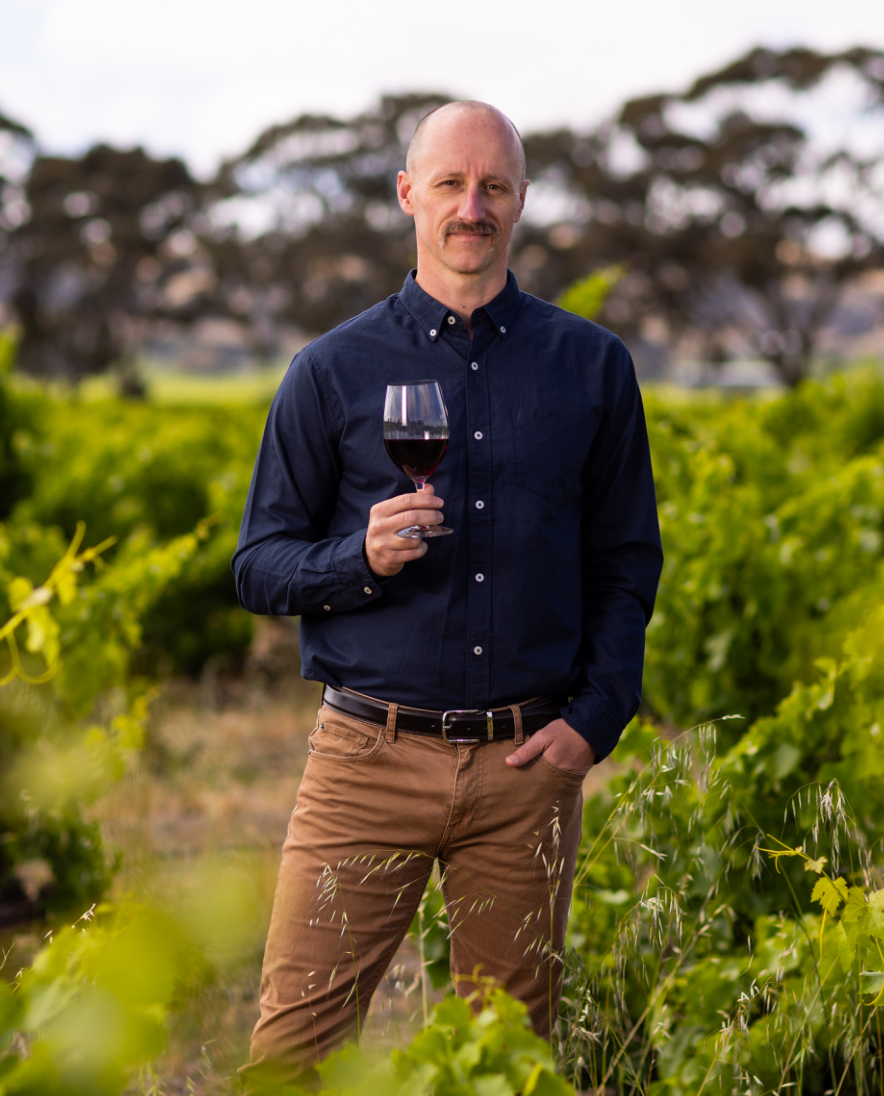
Photo courtesy of Ata Rangi.