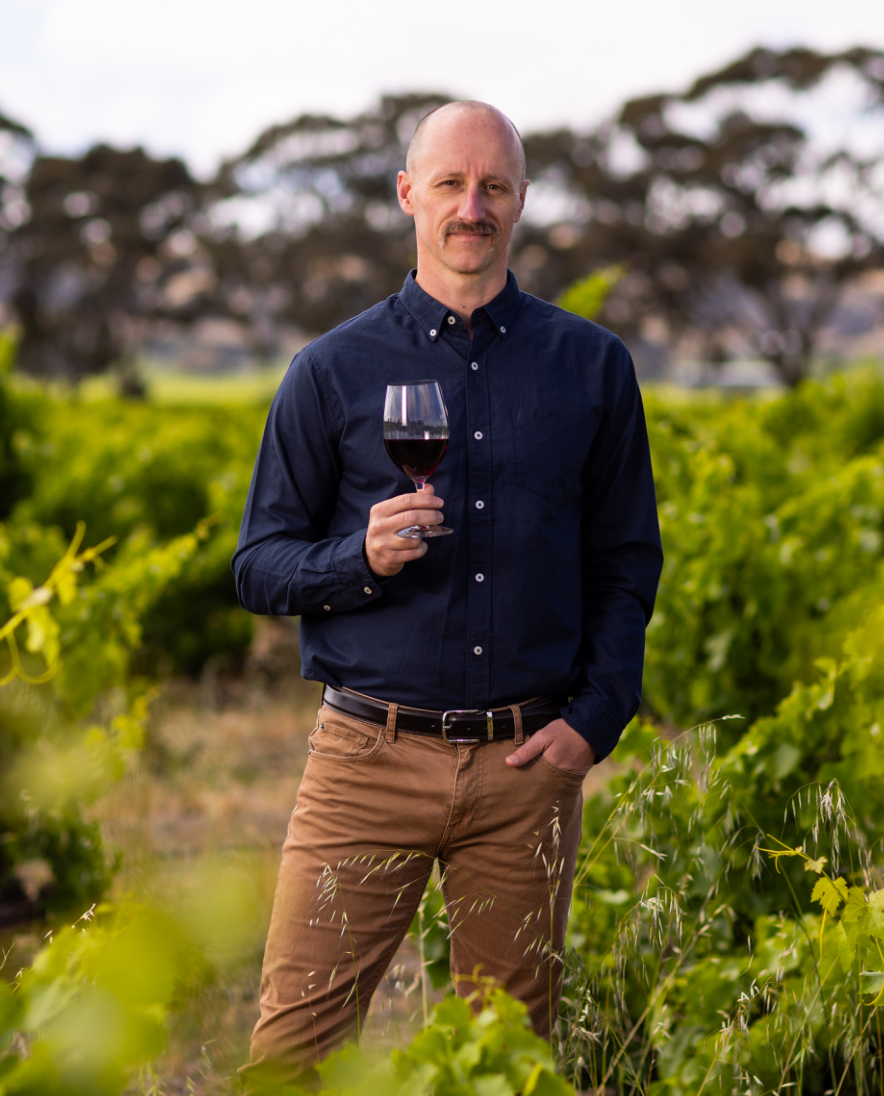
Kinglake Distillery's The Wight: What a Whisky Remembers.
Whisky has an inconvenient relationship with geography.
We like to know where it comes from. Islay, Speyside, Kentucky, Tasmania. We attach a place to a bottle and then go looking for the evidence: Water, weather, wood, air.
But whisky travels.
Barley travels. Oak travels. Casks cross oceans carrying the residue of previous lives. Even time is somewhat unreliable in a warehouse, speeding up or slowing down according to temperature, humidity, wood and air.
The Wight, a limited release from Kinglake Distillery, makes that restlessness unusually tangible.
It began in a 30-gallon ex-Bourbon cask from Journeyman Distillery in Michigan. Two years later, it moved into a 100-litre French oak barrique that had previously held Port and had been re-coopered in Australia. Five years old, bottled at 53% ABV and limited to 165 bottles, it has the sort of provenance that could easily be reduced to a paragraph on a back label.
That would rather miss the point.
The Wight is a whisky about inheritance.
A cask is never quite empty of its former occupant. American oak has already had its Bourbon education. French oak has spent time with Port. Kinglake's spirit arrives later, acquiring traces without surrendering its own identity.
It is less a sequence than a palimpsest: One history written over another, with the earlier one still faintly visible beneath.
That turns out to be an apt way of thinking about Kinglake itself.
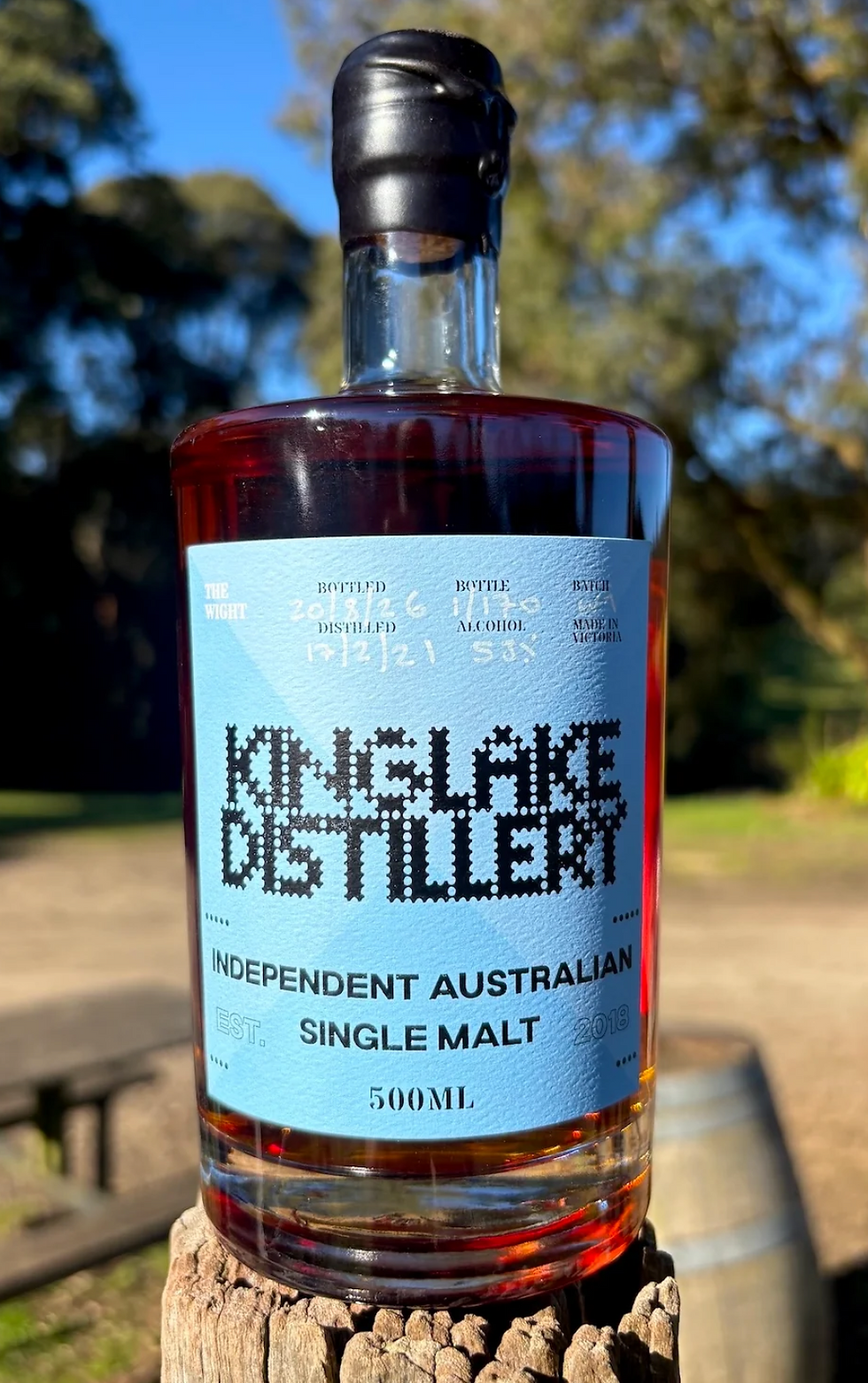
The distillery sits on 50 acres at the edge of Kinglake National Park and operates entirely off-grid. Its water comes untreated from a spring on the property. Fermentation is deliberately open, allowing native yeasts and pollen from the surrounding environment into the process.
The four-grain mash bill, Australian malt and unusually deep final cut into the tails are all choices that favour texture, weight and character. Then there is the climate, with its high humidity, quietly exerting itself during maturation.
The landscape is therefore not scenery.
It is an ingredient.
The water is from Kinglake. The air is from Kinglake. The weather is from Kinglake.
Eventually, so is the whisky.
Terroir has become one of those words the drinks world occasionally asks to do too much heavy lifting. At Kinglake, it feels more useful because the relationship is physical rather than rhetorical. The bush does not need to taste of eucalyptus to make its presence felt. Nor does a whisky need to perform its postcode in order to possess a sense of place.
What matters is that the place has been allowed to participate.
That takes a certain confidence. Open fermentation admits variables. Australian maturation admits variables. Even the decision to take a deeper cut into the tails suggests a willingness to preserve complexity rather than polish every irregularity out of existence.
The objective seems less to make everything predictable than to make the final result precise.
There is an appealing parallel in the distillery's own human geography.
Sam Lowe and Chantal Daniels met while working ski seasons in the French Alps. Daniels is also a third-generation Kinglaker. One relationship with place was acquired; the other inherited. Somewhere between the two, Kinglake Distillery found its vocabulary.
European traditions of regional spirits meet the particularities of Victoria's high country. It is neither an imitation of European whisky nor an exercise in flag-waving Australian exceptionalism.
It is a translation.
The Wight speaks that language fluently.
The first cask gives the spirit a vocabulary of vanilla, caramel and toasted American oak. The French oak Port barrique adds a darker grammar: Damson, dried fig, black cherry and a fine line of tannin. The Port is present, but it behaves itself.
On the nose, the malt is burnished rather than cereal, accompanied by dark honey, vanilla bean and orange peel. Then come black cherry, fig skin and walnut, with something faintly resinous and leathery underneath. There is a suggestion of cacao husk rather than chocolate, which matters. The impression is drier, more adult, less confectionary.
At 53%, the alcohol announces itself but does not dominate. The whisky has shoulders.
The palate opens with malt loaf, dark caramel and toasted hazelnut, before moving into blackcurrant, baked plum and bitter orange. A thread of cinnamon bark runs through it. Then the oak begins to speak, bringing walnut membrane, cocoa nib and a restrained tannic dryness.
The fruit is dark rather than sweet.
There is richness, but it has boundaries.
The texture begins broad and almost velvety before narrowing towards the finish, where the Port influence becomes less fruity and more architectural. Dark fruit recedes. Oak and cocoa remain. A faint mineral bitterness appears at the edges, like black tea left in the pot just a minute too long.
It is a very good kind of severity.
A few drops of water alter the whisky's proportions rather than merely making it gentler. The nose lifts into baked apple, blackcurrant, almond and vanilla. The oak becomes more transparent. The malt comes forward. What initially seemed dark and concentrated becomes more articulate.
Then, after the whisky has sat in the glass for a while, another register appears.
Wet timber.
Mineral earth.
Cool air after rain.
Not eucalyptus. That would be almost offensively obvious.
It is difficult to call it a flavour. Atmosphere is closer.
This is where The Wight begins to behave less like a tasting exercise and more like memory.
Proust understood that memory is rarely summoned on command. It ambushes us through particulars, i.e. a taste, a smell, the texture of something half forgotten. The detail arrives first; the story follows.
The Wight works in much the same way.
Its history does not present itself as a neat chronology. It flickers.
Michigan.
Bourbon.
Port.
Oak.
Kinglake.
And then the name starts to make sense.
A wight is an old word for a being or creature, later acquiring its spectral associations. Whisky is an unusually accommodating home for ghosts. Bourbon has disappeared, but something of it remains. Port has disappeared, but something remains. Trees became barrels. Seasons passed. Yeast lived, worked and vanished.
The whisky is full of absences.
That may be why the environmental philosophy behind Kinglake feels relevant rather than decorative. The distillery has been candid about the practical limitations of relying entirely on solar power for energy-intensive distillation, and its off-grid system reflects that reality rather than pretending the contradiction does not exist. A third of the property has also been committed to native forest restoration through Greenfleet.
There is something more convincing in that than the usual performance of perfect sustainability.
Making is full of compromises. The interesting question is whether the maker notices them.
Kinglake seems to.
And that attention carries into the whisky.
The Wight is ultimately an accumulation of decisions and circumstances: Michigan Bourbon, French oak, Port, Australian malt, spring water, open fermentation, mountain weather, humidity and five years of waiting.
By the time all of that reaches the glass, provenance has become something subtler than a list of origins.
It has become residue.
Taste the whisky slowly and the journey appears in fragments: Malt, dark fruit, orange peel, walnut, cacao, spice, oak. One impression gives way to another, until the richer notes fall away and something cooler and drier remains.
The whisky becomes harder to locate.
It feels like somewhere.
And that is perhaps the more interesting achievement.
The Wight could not have been made from one place alone, yet nothing about the finished whisky feels geographically confused.
It has absorbed its travels.
The bottle contains several histories, but they have ceased to sound like separate voices.
Kinglake has the last word.
A whisky can tell you where it came from.
The more memorable ones make you feel where they have been.
---
Words by AW.
Photo courtesy of Kinglake Distillery.