Sydney's Bar Tilda: A Bar With Something to Say.
Sydney’s CBD is not short of places to drink. Finding a bar is therefore hardly the challenge. The more interesting question is why, with an entire city of alternatives, you would walk through one particular door and remain there.
Bar Tilda has a few answers.
Tucked just off Phillip Street inside Sofitel Sydney Wentworth, it is technically a hotel bar, although that description makes it sound rather more generic than it feels. There is a substantial Australian whisky collection, a Martini trolley, a serious kitchen, a cocktail list that knows when to leave a classic alone and a room comfortable enough to make the original plan for the evening increasingly negotiable.
You can come for a drink and eat dinner. Come for the whisky and end up drinking cocktails. Meet someone after work for “one quick drink”, that cherished fiction which has probably caused more missed trains than public transport ever has.
Bar Tilda does not particularly care what you intended to do.
That is part of its charm.
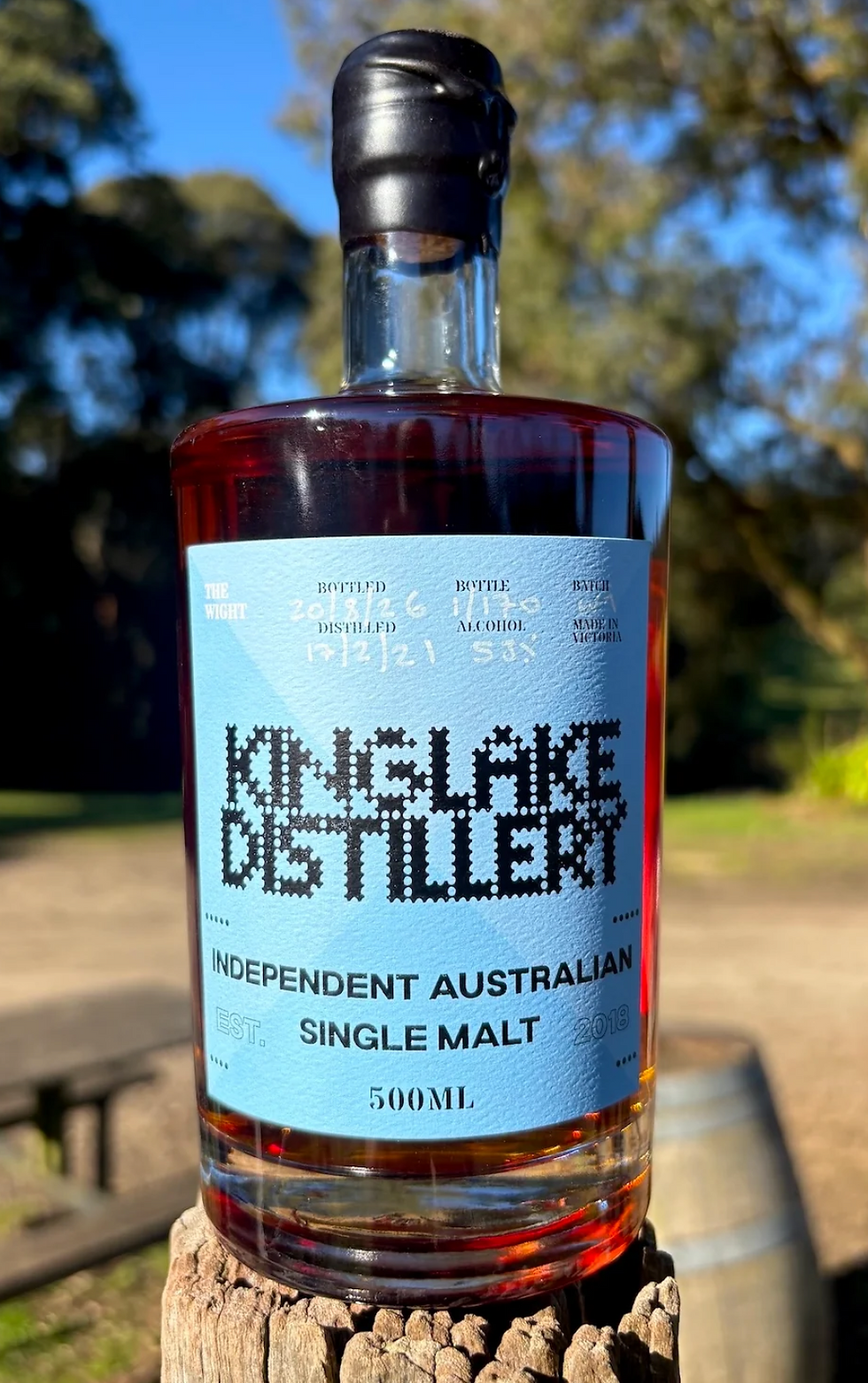
The Australian Whisky Embassy is one of the bar’s most distinctive propositions.
Its Whisky Armoire holds more than 100 Australian whiskies, but the collection, its depth and expert curation is only half the point. Through tastings, releases and events, the Embassy brings producers and drinkers together, with names including Cape Byron, Highwayman, Archie Rose and Hellyers Road having been featured.
It is a sensible idea. Whisky is considerably more interesting when somebody is around to explain why it tastes the way it does.
Australian whisky, meanwhile, has reached the point where it no longer needs to apologise for not being Scottish.
Distillers around the country are working with local grain, oak, climate and maturation conditions to develop spirits that increasingly reflect where they come from. The interesting question is no longer whether Australia can make whisky. It plainly can.
The question is what Australian whisky will eventually sound like in its own voice.
Australia does not need another Scotland.
It needs Australia and places not unlike Bar Tilda.
The Embassy makes that exploration accessible without turning it into a postgraduate qualification. Nobody expects you to arrive with a tasting notebook, a collection of obscure bottles and strong opinions about peat. If you know what you like, excellent. If you do not, that is what the bar is for.
The other reason to stay is considerably more immediate.
Food.
Bar Tilda sits within the wider culinary world of Tilda, but the bar menu has enough substance to make the distinction between “drinking” and “dinner” pleasantly unstable.
Oysters. Scallops. King prawn toast. Tartare. Cacio e pepe.
None of it feels like something added because people become strangely unreasonable when asked to drink whisky without being fed.
The food stands on its own.
And once food arrives, the evening changes shape. A drink becomes a plate; a plate becomes another drink; a whisky tasting becomes dinner almost without anyone noticing. Conversation takes over, the clock loses its authority and tomorrow’s responsibilities become a problem for tomorrow.
This is one of the useful things a good bar can do.
It can make staying seem more sensible than leaving.
The Antonio Bettio factor
Of course, the room is only as good as the people working in it.
Antonio Bettio, Bar Tilda’s bar manager, has been named a finalist for both Bar Manager of the Year and Host of the Year at the 2026 Australian Bar Awards. The combination is revealing.

One recognises the mechanics of the job.
The other recognises what happens when the mechanics are put to work for actual human beings.
A bartender can know every recipe on the menu. A good bartender can recommend something you will like. A very good one can tell when you would rather not be recommended anything at all.
That means knowing when to talk about whisky, when to leave somebody alone, when to make an introduction and when not to interrupt a conversation that has finally become interesting.
It is an underrated skill.
There are few things more exhausting than hospitality that is desperate to demonstrate how hospitable it is. Bettio’s approach is more relaxed.
The cocktail program follows the same principle.
There is no particular virtue in making a Negroni unrecognisable simply because you can. The classics have survived for good reason, and Bar Tilda is happy to let them remain classics.
The Archie Rose Martini trolley adds a touch of ceremony, bringing the drink tableside and allowing it to be tailored to the guest. It is theatre, certainly, but the useful sort. The performance belongs to the drink rather than competing with it.
Elsewhere, Australian ingredients and contemporary ideas are folded into familiar structures.
And then there is the more personal side of Bettio’s menu: Cocktails inspired by people who have mattered to him, including former significant others and other meaningful figures.
It is difficult to think of a better use for an ex than putting them in a cocktail.
Most break-ups produce photographs, awkward encounters at weddings and the occasional late-night message which seemed perfectly reasonable at 1.17am. Bettio has apparently found a more constructive outlet.
The idea also gives the drinks something that can be surprisingly elusive in contemporary cocktail culture: A sense of memory.
There is a person behind most of his creations.
Perhaps that is what makes the classics worth revisiting, too. Tradition is not a set of instructions telling us not to change anything. It is more like a language. You inherit it, learn its rules and eventually discover which ones you can bend without making a mess.
Contemporary hospitality has become rather fond of explaining itself.
Everywhere there are concepts, signatures, origin stories, designated moments and dishes that appear to have been engineered specifically for somebody holding a phone.
Bar Tilda is more convincing because it does not seem particularly anxious to tell you what it is.
The room has a distinct look, think 1960s-inflected, warm, tactile, with the whisky armoire providing a particularly handsome focal point, but it does not feel like a set waiting for somebody to photograph it.
It feels like somewhere people can actually spend an evening.
That sounds obvious.
It is not.
A good bar has to cope with people who want completely different things from it. Someone wants whisky and conversation. Someone wants dinner. Someone wants a Martini. Someone wants to sit quietly for half an hour before going home.
The trick is not to make all of them behave the same way.
Bar Tilda gives them enough room not to.
You might arrive for the whisky.
You might stay for the food.
You might order the Martini because the trolley is there and because, occasionally, a little ceremony is entirely justified.
Or you might simply be nearby.
Then someone starts talking. Another drink arrives. Dinner becomes an afterthought. The clock advances rather more quickly than expected.
At some point you realise the evening you planned has been replaced by a better one.
That is difficult to manufacture.
It is also probably the best test of a bar.
Bar Tilda has enough going on to keep things interesting without making a production of it.
Australian whisky gets a proper platform. The food can carry its share of the evening. The cocktails have personality without suffering from an identity crisis. And the people behind the bar understand that hospitality is not the same thing as constant attention.
In a city with no shortage of places competing for your next drink, Bar Tilda offers something considerably less noisy:
A good reason to have another one.
---
Words and photo by AW.