Felton Road Wines: The Art of Knowing When to Leave Well Alone.
Updated: Aug 19
Some wines announce where they come from with the subtlety of a brass band. Others seem to assume that, given half a chance, you’ll work it out for yourself.
Felton Road has always struck us as belonging to the latter camp.
Its story began with an unusually sure-footed choice of land in Bannockburn in the early 1990s. More than thirty years on, its four vineyards produce Pinot Noir, Chardonnay and Riesling that have helped define what Central Otago can do when it is allowed to be more than simply dramatic. The wines have precision, but rarely austerity; generosity, without much interest in grandstanding. They tend to behave rather better than wines with this sort of reputation might reasonably be expected to.
That apparent ease is deceptive, of course. Felton Road farms organically and biodynamically, with an almost obsessive amount of work taking place among the vines.
There is plenty of human intervention in the vineyard, much of it repeated, physical and decidedly unglamorous. In the winery, though, the instinct is almost the opposite: gravity rather than pumps, indigenous yeasts, natural malolactic fermentation and a fairly pronounced reluctance to interfere simply because intervention is available.
The Pinot Noir is neither fined nor filtered. The Chardonnay sees surprisingly little new oak. The Rieslings are given room to find their own balance between fruit, acidity and sweetness rather than being bullied into submission.
There is something rather appealing about that distinction: Fussiness in the vineyard, restraint in the cellar.
It also runs counter to one of the more persistent habits of modern life, which is the assumption that almost everything can be improved by doing something to it. More data. More intervention. Another setting. Another adjustment. Wine, fortunately, remains stubbornly resistant to this sort of managerial enthusiasm.
The Japanese idea of ma, i.e. the space or interval between things - provides an oddly useful way of thinking about Felton Road. It isn't quite emptiness, and certainly isn't inactivity. It is the understanding that the space left untouched can matter just as much as what has been put there.
There is something of that in these wines. The work is meticulous, but the finished wine doesn't feel overworked.
Perhaps this is also why the differences between Felton Road's vineyards remain so apparent. They are farmed with a shared philosophy, but not forced into identical expression.
You can sense the family resemblance without mistaking one sibling for another. The house style, if there is one, seems to be less about making everything sound alike than knowing when to leave the vineyard's accent intact.
That feels increasingly rare.

Wine has become very good at optimisation. We have better technology, better analysis, better information and, presumably, more opinions than any generation of winemakers before us. Yet a vineyard still has the irritating habit of being a living thing. Seasons misbehave. Weather ignores forecasts. Vines take their own sweet time. None of them, thankfully, has ever attended a quarterly strategy meeting.
Felton Road's achievement may therefore have as much to do with accumulated attention as with technique: learning a place slowly, allowing mistakes and observations to become part of the institutional memory, and accepting that some of the most useful knowledge is knowing when not to act.
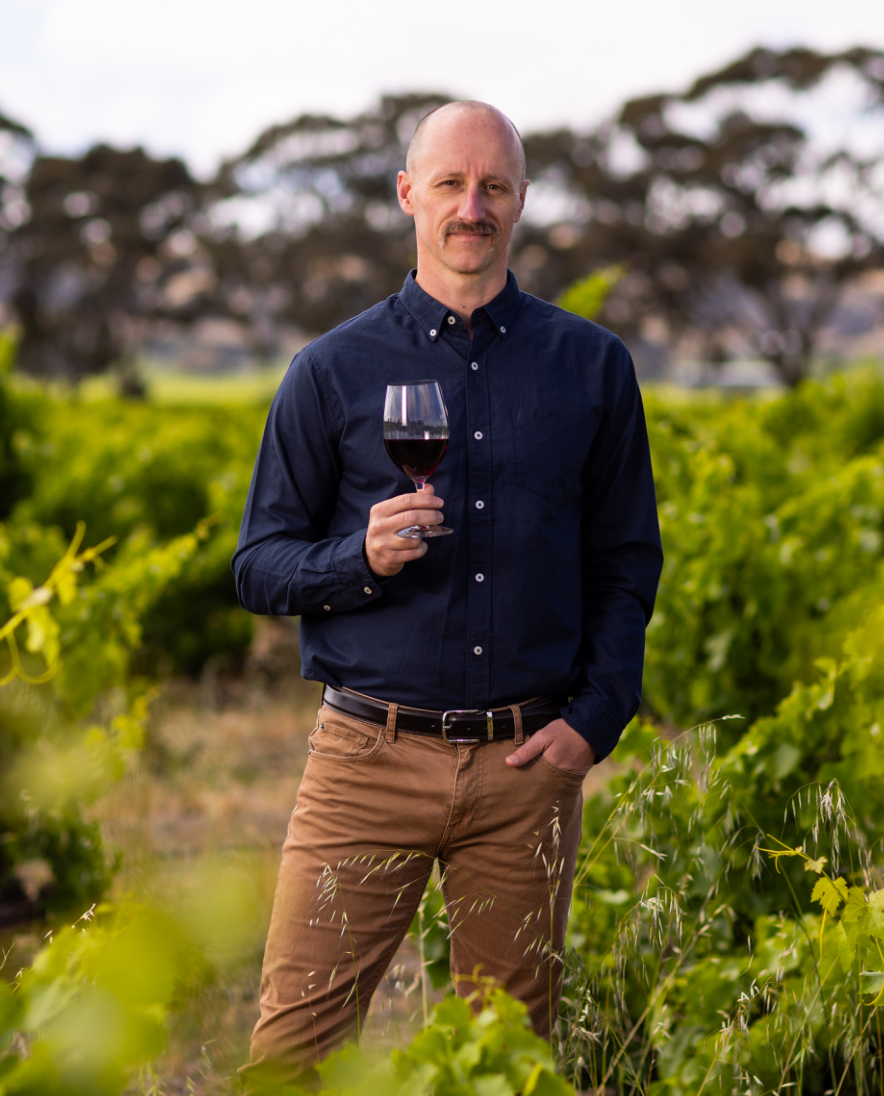
Which makes a conversation with Felton Road's winemaker Blair Walter particularly interesting. Behind the wines is a much larger question about place, patience and experience - and about the rather difficult art of recognising the moment when expertise has done enough, and should have the good sense to get out of the way.
Felton Road began with the belief that site selection mattered enough to determine the future of the wine before a vine was even planted. More than three decades later, what does Bannockburn still teach you that cannot be learned from a textbook, laboratory or tasting bench?
Blair Walter: I often wonder at Stewart Elms’ (Felton Road’s founder) prescience in choosing the site that he did. There was no proof of concept back then. Between our vineyard and the Olssens’ and Dicey plantings across the road, the total area of Central Otago doubled to 22 hectares with those 1992 plantings. When I taste wines from our first vintages, I can’t help but think of the daring involved in their production.
The underappreciated quality that great vineyards have is that they’re the easiest place to grow amazing fruit. That doesn’t mean that it’s simple or that we don’t put an enormous amount of work in. It takes - on average - 25 minutes of work, from pruning to bottling, to produce a single bottle of Felton Road wine. All but three of those minutes occur in the vineyard.
Rather, it’s the nature of great sites to fully reflect the efforts you make and allow you to capture this in the flavours, aromas, and textures of a bottle of wine.
Central Otago is often described through extremes - intense sunlight, cold nights, dry conditions and dramatic seasonal variation. Has working in such a demanding landscape changed your understanding of what “ripeness” actually means, particularly when freshness and restraint can be as important as concentration?
Blair Walter: Absolutely. The concept of ‘ripeness’ is best kept nebulous; applying differently depending on site, vintage, and cepage. Taken as the potential balance of flavour, texture, acidity and alcohol; ripeness evolves as the capacity of the vine matures.
The depth of tannin we see from our fruit after more than twenty years of organic farming means that we don’t need to push for concentration. There’s an important distinction to be made between flavour concentration and intensity. Concentration is the volume dial on a sound system; intensity is the fidelity of the record.
The natural and unforced structure that has emerged from our vineyards allows us to present the latter without overdoing it on the former.
Felton Road farms four vineyards within Bannockburn, yet the wines retain a recognisable sense of place. How do you preserve a house identity without allowing it to become a filter through which every vineyard is forced to look the same?
Blair Walter: In essence, it is the consistency of approach that allows the character of the vineyards to shine through. Each Pinot Noir fermenter - be it from The Elms, MacMuir, Calvert, or Cornish Point - is afforded the same attention. Subtle differences in winemaking are applied according to circumstance, but never with the intention of making a wine where technique speaks louder than the ingredients.
This applies with Chardonnay too; very little new oak, native ferments, no fining or filtration.
In being consistent in our vinification approaches, the vineyard source becomes the salient variable. The differences are apparent, but there’s an undeniable family resemblance.
Biodynamics can easily become reduced to a set of practices or certifications in the language of wine marketing. What does it actually change in the way you observe and work with the vineyard - and has it altered your understanding of the vineyard as a living system rather than simply a site of production?
Blair Walter: The point that is often missed about Biodynamics is the presence that its practices require and the perspective that this affords you. Our vineyard crew are every bit as much a part of our vineyard ecosystem as the vines, trees, and mycorrhizae. The average Felton Road vine is touched at least twelve times in a season, and passed dozens of times more.
The hands-on nature means that we’re constantly observing how the vineyard is being shaped by the season, where - and how - to intervene and where to let things be.
This fact that we are part of the system, not its overlords informs everything that follows. Farming for ecosystem health, in harmony with nature's forces, turns the Sisyphian challenges of conventional farming into an act of progressive restoration.
There is a fascinating paradox in Felton Road's approach: considerable human intervention in the vineyard, followed by restraint in the winery - gravity rather than pumps, indigenous yeasts, natural malolactic fermentation and, where appropriate, no fining or filtration. Is minimal intervention actually more demanding because it leaves fewer places for the winemaker to hide?
Blair Walter: Yes and no. I think it's more a question of where one wants to allocate attention. The ‘interventionist’ tools available to the modern winemaker doubtlessly serve a purpose to those who use them; not least, in many cases, to mitigate risk.
When you refuse yourself those guardrails, you have to dial in completely on the variables you can control. For me, these are: when to harvest, how to manage the macerations during fermentation, and when to press.
This may sound demanding but it is very rewarding. Plus, I don’t have to spend time worrying about which winemaking products to buy!
Your wines often possess an unusual combination of precision and generosity. Where does that balance begin - in the vineyard, in the moment of harvest, or in the countless small decisions made afterwards?
Blair Walter: It absolutely starts in the vineyard, from the soil up. A balanced vine produces fruit in which all the ripening parameters - sugars, acids, phenolics and flavours - reach optimal levels with synchronicity.
The key thing is to harvest the fruit in that window. This is why we have a 60-strong harvest team, so that we never have to compromise picking decisions due to logistics.
For Pinot Noir, the key process is to manage the extraction. We’ve become increasingly gentle as the phenolics of the fruit have grown more abundant with vine age. The decision of when to press the wines off the grape skins is another key consideration. It requires patience to allow the tannins to resolve themselves, often up to a week after the end of fermentation.
Pinot Noir tends to attract the spotlight, yet Felton Road's Rieslings can be remarkably expressive, particularly in the tension between residual sweetness and crystalline acidity. What does Riesling allow you to explore that Pinot Noir does not?
Blair Walter: Often it’s a real test of nerve! If Pinot Noir sits in the sweet spot for ripening here in Bannockburn, Riesling is truly at its southern limit. In many ways this is a thrill; the long slow ripening through late autumn (we picked Block 1 on the 24th of April this year) allows flavours to mature after sugars have stopped accumulating; moving from ripe citrus into the stone and tropical fruit spectrum.
Another dimension of making Riesling is analogous to Pinot production: structural balance. For Pinot, it’s the interplay of tannin, acidity and fruit that we’re optimising for; with Riesling its acid, sweetness and fruit.
We look for a point of structural balance where these components harmonise such that the flavour of the wine is what remains on the finish. The only way to assess this is by taste, much in the same way that we decide when to press for Pinot Noir.
Wine is often spoken about as an expression of a particular vintage, but climate change is making the idea of a stable historical “normal” increasingly difficult to defend. How are changing seasons influencing the way you farm, harvest and think about the wines Felton Road might make in twenty or thirty years?
Blair Walter: Variability across seasons has been inherent to Felton Road since our first harvests; picking dates varied by over a month in just our first five vintages.
The prevailing trend has been towards slightly earlier seasons, from budburst through to harvest.
In the context of wider climate disruption, we have been remarkably fortunate. Thinking to our peers around the world, we have been spared the privations of cyclones, wildfires, floods, and droughts.
The good fortune that we feel serves as motivation to act, both within the confines of our vineyards and in ways that extend well beyond them.
On the ground, our focus is on building long-term resilience. In practice, this means increasing the biodiversity of the vineyard ecosystem: reduced tillage, multi-species cover crop mixes, incorporating biochar, establishing and regenerating native plant species are all inherent to this approach. These practices add buffers to our system: Increased soil carbon boosts soil moisture retention, ground cover cools the vine microclimate.
To be resilient, a long-term view is required. We intend delicious wines to be grown from our vineyards for generations to come. We’re still learning from the experimental rows that Stewart Elms planted on Felton Road in 1992 and we’re emulating him each time we develop a new block.
In the past six years, we’ve begun trialling six new rootstocks. Many of the lessons we’ll learn from these vines won’t become apparent for decades but that’s the nature of truly sustainable viticulture.
There is a philosophical idea that restraint is not the absence of action but the ability to recognise when further action would diminish the thing itself. Does that resonate with your approach to winemaking - and are there moments when the hardest decision is simply to leave the wine alone?
Blair Walter: Nigel, Felton Road’s owner, designs our harvest t-shirts each year. In 2023, he included a quote from Antoine de Saint-Exupery:
“In anything at all, perfection is finally attained, not when there is no longer anything to add, but when there is no longer anything to take away.”
The beauty in having worked with the same vineyards for thirty vintages is that you develop a familiarity with the fruit, how it behaves and when it’s truly misbehaving. In those instances, you have to be decisive but experience over three decades has taught me that more often than not, the quality of the vineyard and all of our work there will win the day.
Finally, if you removed the language of terroir, biodynamics, sustainability, varietal character and winemaking technique, what would you hope someone actually feels when they taste a Felton Road wine for the first time?
Blair Walter: ‘Holy f… that’s delicious! May I pour you a glass before I refill mine?’
Wine should be drunk for the pleasure it brings with company you enjoy. For those who delight in abstraction, analysis, blind-tasting etc., that’s great, so do I! But I feel that a wine is only worth deconstructing if it’s bringing you pleasure when you taste it.
---
Words and questions by AW.
Answers courtesy of Blair Walter.
Photo courtesy of Felton Road.