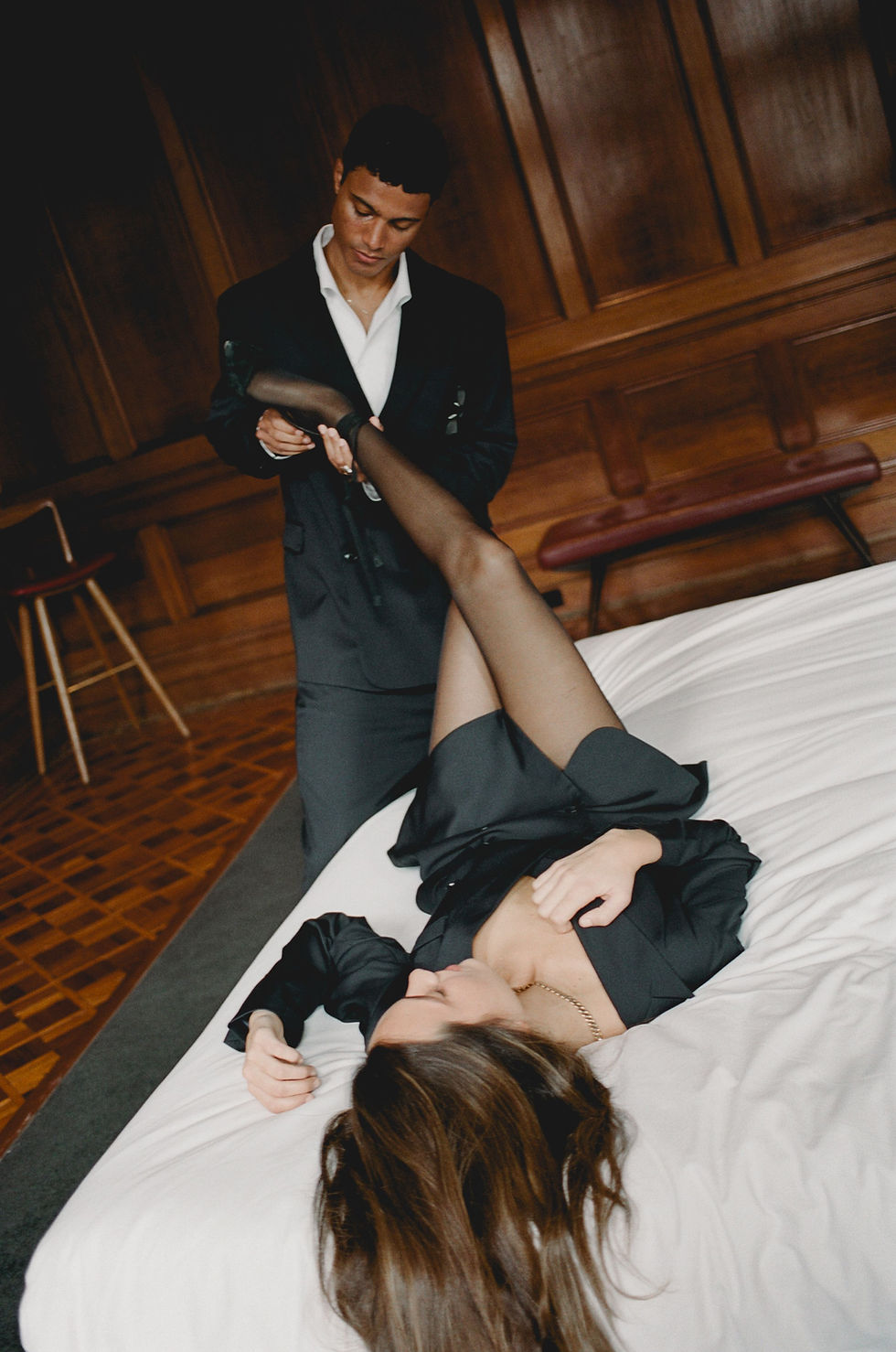
The Fineness of Things Unseen: Zegna and the Gentle Conspiracy of the Golden Fleece.
There are materials that perform, and then there are those that recalibrate - subtly, almost subversively - the terms by which we recognise refinement. Vellus Aureum, the latest proposition from Zegna, belongs firmly to the latter. It does not shimmer under light or declare itself across a room. Instead, it operates in a more elusive register, where the hand begins to doubt what the eye can confirm.
The name - Latin for “Golden Fleece” - arrives freighted with myth. Jason pursued his prize with a kind of heroic insistence, a narrative built on conquest and spectacle. Zegna’s interpretation is altogether more restrained, even corrective. There is no singular object here, no triumphant retrieval. Instead, there is a dispersed pursuit: decades of correspondence, cultivation, calibration. A fleece not taken, but coaxed into being.
Its origins lie, improbably and precisely, in Australia - in merino bloodlines refined over generations, where the difference between excellence and anomaly is measured in microns. At 12–13 microns, Vellus Aureum sits at the outermost edge of what wool can physically become; at its most exceptional, it has reached 9.4, a number that reads less like textile specification and more like a limit condition. Fibres at this scale approach the diameter of fine particulate matter. They are not meant to be seen so much as inferred.
And yet, to reduce Vellus Aureum to fineness alone is to miss its more interesting contradiction. Softness, here, is not indulgent - it is engineered. Under the direction of Alessandro Sartori, the material is asked to perform against its own nature: to hold structure without weight, to resist without coarsening, to endure without forfeiting its delicacy. It is, in effect, a study in tension - one that feels closer to the measured stillness of Giorgio Morandi than to the overt theatrics of runway innovation.
The garments follow suit. Outerwear - blousons, field jackets, vests - arrives with a kind of architectural restraint. Lines are clean, almost withheld; leather details appear not as ornament but as punctuation. One is reminded of Carlo Scarpa, whose work understood that material, when treated with enough intelligence, could carry its own argument. Nothing extraneous, nothing merely decorative - just an insistence on proportion, on balance, on the quiet authority of things made well.

Tailoring, cut in the Torino silhouette, sharpens that argument. These are suits that do not rely on silhouette alone, but on interiority - silk linings, hand-finished seams, a kind of invisible labour that reveals itself only over time. They recall, perhaps, the discipline of Italo Calvino’s unfinished lectures: lightness, exactitude, consistency - values that resist grand gestures in favour of something more enduring, more exacting.
And then there is knitwear, where the fabric relaxes into its most persuasive form. Mock necks, cardigans, pieces that might otherwise risk banality, become studies in proximity. They are not designed to be noticed immediately. They are designed to be lived with - to accumulate meaning slowly, through wear, through repetition, through the small rituals of daily use.
If the collection feels assured, it is because its foundation is unusually concrete. In 1963, Ermenegildo Zegna established the Wool Trophy Awards, a gesture that reads less like corporate initiative and more like a long-form conversation. Letters travelled from Italy to Australian woolgrowers, urging not simply better yields, but a shared pursuit of the exceptional. Over time, those exchanges produced something rare in luxury: a supply chain that behaves less like a transaction and more like a collaboration.
Today, that collaboration is rendered visible - paradoxically - through traceability. Each fibre is accounted for, its origin documented, its journey legible. There is a certain irony here: the finer the material becomes, the more insistently it demands proof of its own existence. In this, Vellus Aureum edges toward the thinking of Walter Benjamin, who understood that the “aura” of an object is inseparable from its context - its embeddedness in time, place, and process. Remove those, and the object thins out. Restore them, and it regains weight, even when it appears weightless.
What emerges is not simply a fabric, nor even a collection, but a proposition. That innovation, in its most compelling form, need not rupture with the past, but refine it to the point where it begins to feel new again. That luxury, when stripped of excess, can still retain its charge - perhaps even intensify it. And that elegance, properly understood, is less about what is seen than about what lingers: a sensation, a memory, a fleeting certainty that something, however intangible, has been done exceptionally well.
Vellus Aureum does not ask to be admired. It asks to be understood - slowly, almost reluctantly. And in that delay, in that slight resistance, it finds its quiet, improbable power.
---
Words by AW.
Photo courtesy of Zegna.