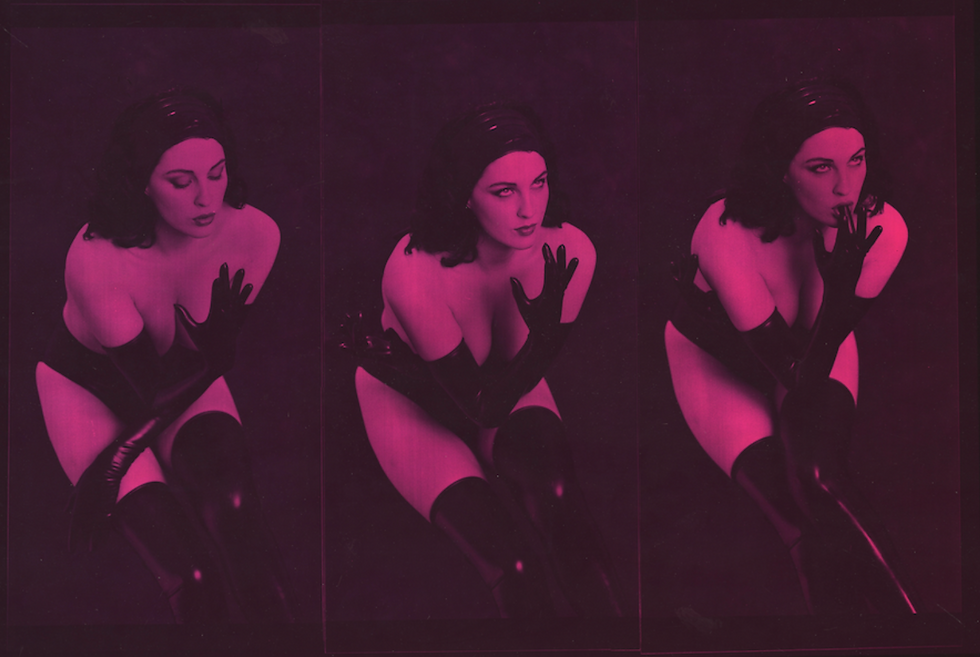
GmbH - Doppelgänger, Memory, And The Fear Of Peace.
GmbH has never behaved like a fashion label in search of relevance. It has behaved, instead, like a critical position - one articulated through fabric, silhouette, and refusal.
Founded in Berlin in 2016 by Benjamin Alexander Huseby and Serhat Işık, GmbH emerged from a city that does not permit innocence. Berlin is a place where history is neither resolved nor distant; it leaks into architecture, language, and everyday gesture. Both designers are shaped by migration, queerness, and the administrative violence of borders - experiences that sit uneasily with fashion’s traditional fantasies of ease, luxury, and transcendence. From the outset, GmbH rejected the idea that clothing could ever be neutral. Their work insists that garments are social documents, implicated in the systems that produce them and the bodies that must move within those systems.
Early collections established a grammar that remains recognisable today: the aesthetics of authority pulled apart from the inside. Uniforms appeared, but not as homage. Tailoring referenced bureaucracy, policing, clerical power - then destabilised it through exposure, elasticity, latex, or abrupt softness. Club culture collided with religious iconography; fetish codes brushed against administrative severity. The effect was never parody. It was proximity. Power, GmbH suggested, is most dangerous not when it is theatrical, but when it feels ordinary.
That preoccupation gives context to Friedensangst, a term that has hovered around the brand’s recent thinking like a moral indictment. A compound noun in the German bureaucratic tradition, Friedensangst - fear of peace - does something insidious: it reframes the cessation of violence as a threat rather than a relief. The term belongs to the same linguistic universe Hannah Arendt diagnosed in Eichmann in Jerusalem, where language functions as insulation, allowing ethical catastrophe to be processed as administrative necessity. Violence becomes structural, routinised, quietly profitable. Peace, by contrast, becomes disruptive.

For GmbH, Friedensangst was less a provocation than a diagnosis. The scandal was not that such fear existed, but that it could be articulated openly, almost casually, without moral embarrassment. This is the atmosphere in which Doppelgänger takes shape.
The title reaches beyond folklore into psychoanalysis. In Freud’s 1919 essay The Uncanny, the doppelgänger is described as a figure that once promised continuity or protection, but becomes terrifying through repetition. What was familiar returns altered, emptied of reassurance. History behaves similarly. Patterns recur, aesthetics resurface, rhetoric reappears - until recognition itself becomes a source of dread.
Berlin, again, sharpens the resonance. Walter Benjamin warned that fascism aestheticises politics, transforming domination into spectacle and ritual. Doppelgänger responds by reversing the charge. Here, aesthetics are stripped of comfort. Beauty exists, but it is tense, severe, watchful. Nothing invites surrender. Everything asks to be read.
The show’s setting - Kraftwerk - was not incidental. A former power station turned cultural monolith, the building is a palimpsest of industrial ambition, postwar ruin, and techno utopianism. It embodies the persistence of systems beneath shifting ideologies. Concrete walls still bearing the weight of production framed a collection preoccupied with endurance: how structures survive even when their stated values collapse.
Musically and visually, the collection gestured toward early 1980s West Berlin, a city economically marginal, physically enclosed, and creatively feral. The industrial scene and Neue Deutsche Welle were not mere stylistic references but political ancestors.
Einstürzende Neubauten treated sound as demolition, collapsing architecture into rhythm. DAF fused militaristic beats with queer provocation, exposing the erotic charge embedded in discipline and control. These movements did not aestheticise power; they short-circuited it. GmbH inherits this lineage not as revivalism, but as method.
The clothes themselves operated through restraint and recurrence. Leather functioned less as seduction than as armour. Tailoring echoed institutional authority, then fractured under tension - stretch, cut-outs, exposed skin. Florals appeared not as softness or romance, but as interruption: fragile, stubborn signals of life persisting under pressure. Repetition across looks was deliberate. It reinforced the central anxiety: when forms repeat often enough, they stop reassuring and start warning.
Poetry, long integral to GmbH’s practice, anchored the collection. These texts were not decorative but ethical. Like Paul Celan’s postwar verse, they refused closure. They sat with grief without resolving it, language fractured under the weight of history. Brecht’s presence loomed large. Writing from exile, Brecht understood how easily societies slip into complicity when survival becomes the dominant logic. His insistence that neutrality is itself a choice resonates through Doppelgänger as an accusation rather than an instruction.
What distinguishes GmbH from many politically engaged fashion projects is its resistance to didacticism. There are no slogans to consume, no moral binaries offered for reassurance. Instead, the work generates friction. Authority is shown, not caricatured. Desire is acknowledged, not disavowed. The body is treated as both site of pleasure and site of governance.
This tension mirrors the brand’s material reality. Approaching its tenth year as an independent label, GmbH operates within an industry increasingly hostile to autonomy. Independence here is not a posture but a condition marked by precarity, fatigue, and constant negotiation. That struggle manifests in the collection’s discipline. Nothing feels excessive. Nothing panders. Each gesture carries weight.
Doppelgänger ultimately asks what resistance looks like when history ceases to feel linear and begins to loop. When the aesthetics of the past return stripped of their warnings. When violence becomes background noise, and peace is treated as destabilising.
GmbH offers no consolations. What it offers is clarity.
To name the fear. To refuse its normalisation. To dress the body not as escape, but as witness.
If fashion is often accused of amnesia, Doppelgänger insists on memory - not nostalgia, not heritage, but memory as burden and responsibility. Something carried unwillingly, yet consciously.
And if peace has become frightening to those in power, then fear itself has finally disclosed where it belongs.
---
Words by AW.
Photo courtesy of GmbH.