


Between the Hammer and the Canvas: Suzy Sikorski and Bonhams at the Crossroads of Middle Eastern Art.
- Dec 17, 2025
- 8 min read
In the labyrinthine world of global art, where canons are contested and markets often speak louder than scholarship, Bonhams occupies a singular position. Founded in 1793 on London’s bustling Bond Street, it has long been a keeper of cultural curiosities - an institution where aristocratic provenance meets the unpredictable rhythms of contemporary desire. Today, Bonhams’ reach spans six continents, sixty-plus specialist departments, and a clientele as diverse as the objects it auctions, from Cartier timepieces to Middle Eastern modernist canvases. Yet its true distinction lies in translation: the ability to make regional narratives legible - and irresistible - to a global audience, without flattening their nuance or history.

Guiding this delicate balance in the Middle East is Suzy Sikorski, Bonhams’ Business Development Director for the region, whose career reads less like a CV and more like a well-curated exhibition. A Fulbright Scholar with degrees in Middle Eastern Studies and Art History, she has spent over a decade immersed in the region’s creative networks, conducting more than 150 artist interviews and founding the research platform Mid East Art. Sikorski navigates the space between rigorous scholarship and market intelligence with enviable ease: she can discuss provenance and auction strategy one moment, then pivot to nuanced debates on GCC modernism, Levantine collectives, or the subtle interplay of language and identity in contemporary practice the next.
Her work, whether in the sun-soaked studios of Dubai or the emergent art spaces of Riyadh, is a masterclass in cultural storytelling. Collecting, she reminds us, is never just acquisition - it is stewardship, curiosity, and sometimes a quiet act of rebellion against the blinkered gaze of the Western canon. In the process, Sikorski makes the unseen seen, the overlooked celebrated, and the local legible to the global, all while maintaining a keen sense of wit and perspective that is, paradoxically, as rare as the works she helps to steward.
Based on our recent visit to Dubai Watch Week and the Bonhams pavilion - where Suzy was very much holding court - this feature moves beyond a simple catalogue of her achievements. Instead, it explores the dynamic intersections of art, market forces, and cultural advocacy, granting readers an insider’s view of a region whose narratives are as layered and compelling as the works themselves. At its center are champions like Sikorski: intelligent, incisive, and embodying the same spirit as the art they so passionately celebrate.
Your work sits at the intersection of scholarship, market intelligence, and
cultural advocacy. How do you balance these demands?
Suzy Sikorski: I’ve always worn two hats - one rooted in the commercial market and one grounded in curatorial and research-driven work - and that balance is essential to understanding how visual culture in the region has evolved. I constantly relearn, unlearn, and engage with the canons of art, luxury, film, and literature to keep my perspective sharp. It’s equally important to travel regularly, visit artist and creatives studios, read and listen to
the latest coverage, speak with practitioners across the art and luxury worlds, and
maintain close contact with artists and craftsmen; the landscape in the region shifts so
quickly that staying close to its makers and writers is indispensable.
At the same time during my work at Bonhams speaking with clients, I anchor every
conversation in both market expertise and academic rigor – in the end each work
shares a niche story, whether via the provenance and uniqueness of the work. After
more than twelve years in the Middle East, the relationships and histories built along the
way remain central to how I navigate the market while honoring the responsibility of
cultural storytelling.
You’ve conducted more than 150 interviews with artists. What shifts have you
observed in how artists articulate their philosophies?
Suzy Sikorski: One of the clearest shifts emerged during Mid East Art’s Artists in Quarantine series, which unexpectedly transformed Mid East Art into a community-driven network and revealed how deeply artists in the region sought connection. Since COVID, that sense of community has only strengthened: artists are now more digitally connected,
supported by new regional publications and platforms that emerged during that period.
This has encouraged deeper readings of their practices while reinforcing local narratives
at a time when international institutions are increasingly engaging with artists from the
region. What stands out today is a stronger drive towards identity - artists root
themselves more deliberately in place, history, and lived experience, even as their
visibility becomes more global.
Mid East Art began as a research initiative and evolved into a platform. What
gaps compelled you to build this archive?
Suzy Sikorski: Mid East Art began as a personal attempt to learn about the region’s creative history: growing up in New York, my exposure to the region’s modern and contemporary art came through a variety of publications - Canvas, Harper’s Bazaar Arabia, Bidoun, Ibraaz - and the various exhibition sor gallery programs.
The gaps were immediately clear: Middle Eastern art wasn’t embedded in the traditional art-historical canon in a way one could study easily or institutionally, so I set out to construct a more holistic understanding myself.
Not being ethnically from the region also pushed me to approach it with rigor, gathering and learning directly from artists and creatives. While regional art is now more celebrated, significant blind spots remain: the layers within each country and city, the rereadings needed, and the critical discourse that will naturally deepen over time.
What structural transformations are reshaping the Middle Eastern market
today?
Suzy Sikorski: Across the market, there is a clear shift toward embracing a more global modernist perspective - seen in institutional exhibitions, biennales, academic research, and
collector interest. Museums and private collections are re-mapping their holdings with
greater intentionality, identifying the gaps needed to tell a fuller global story. Equally
important is the rise of new collectors and first-time buyers who now see collecting as a
form of cultural stewardship rather than an exclusive pursuit.
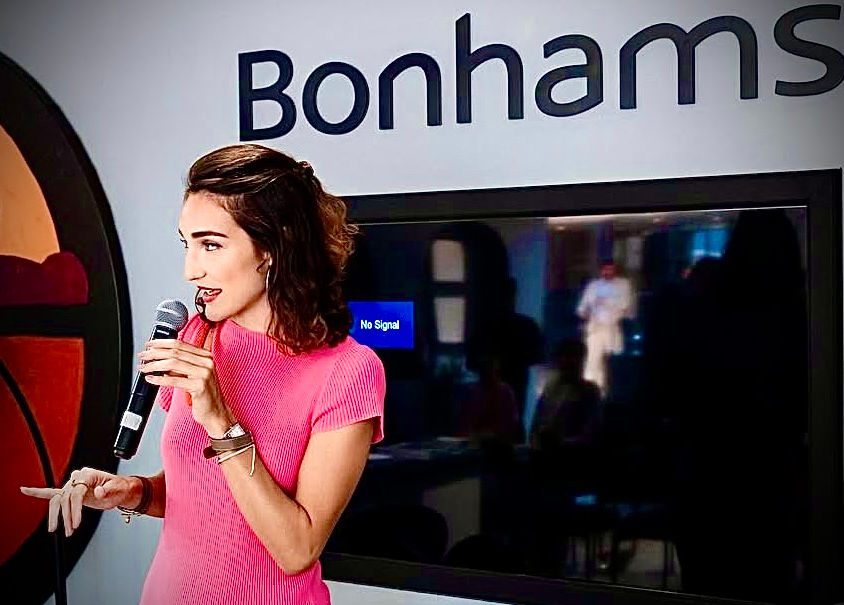
At Bonhams, this has been a guiding principle in our regional strategy: building future patronage by leveraging the versatility and deep expertise of specialists across global departments and translating that knowledge meaningfully for collectors in the region.
This was reflected in our role as the dedicated auction partner for Dubai Watch Week (DWW) - recognizing how luxury and culture intersect in the Gulf - and in the establishment of new collector pathways that feel both accessible and desirable. Showcasing multidisciplinary highlights at DWW- from Middle Eastern modern and contemporary art to watches, jewellery, handbags, and Haute Couture - allowed us to illustrate how collecting today is increasingly cross-category. Combined with the emergence of art funds, patronage initiatives, and private foundations, these forces are reshaping the cultural and commercial landscape in profound and collaborative ways.
Which artists or movements remain underexamined, and what is lost when they
remain outside the global canon?
Suzy Sikorski: Middle Eastern modernism has long been shaped by Levantine and Egyptian
movements supported by patrons whose collecting histories span generations. What is
especially exciting now is the heightened focus on GCC modernism - artists and
collectives whose practices unfolded in parallel with nationalist, pan-Arabist and global
modernist movements throughout the twentieth century. Their contributions reveal
dialogues and experimental frameworks that developed in alignment with, yet distinct
from, Western art histories. Biennales such as Venice and Sharjah, along with regional
institutional exhibitions, are beginning to foreground these narratives. Likewise, North
Africa’s rich modernist history - across Morocco, Algeria, and Tunisia - is finally
receiving more nuanced attention.
How does your multidisciplinary background shape your approach to advising
collectors and interpreting artworks?
Suzy Sikorski: My approach has always been shaped by a multidisciplinary foundation- studying international politics, working across the commercial and luxury markets, and observing how visual culture in the region continually redefines itself. This background allows me to approach art with cultural mindfulness, aware of how meanings shift through dialogue between those from the region, those who have made it home, and those engaging
from the outside. In my work at Bonhams, this lens ensures that collectors receive
guidance that is both culturally nuanced and strategically informed, supported by
specialists who have long been active in research, curatorial projects, and the
stewardship of Middle Eastern modern and contemporary art. It allows me to guide
decisions with both contextual sensitivity and global perspective.
You work across Dubai and Riyadh. What distinguishes these ecosystems, and
where is the potential for cross-pollination?
Suzy Sikorski: I split my time between Dubai and Riyadh, two cities evolving rapidly but each with its own rhythm and cultural identity.
The UAE has long benefited from established institutions and a diverse, niche collecting community, while KSA is experiencing an exciting acceleration, building new ecosystems driven by local narratives and regional art histories.
For us at Bonhams, hosting our first auction highlights tour in Riyadh –
Judhoor: Roots of Saudi Modernism - focused on the first generation of Saudi
modernists, as part of our Middle Eastern Modern & Contemporary Art auction in
London. This was a meaningful moment, underscoring our commitment to historic
grounding and educational narrative-building. The strongest space for cross-pollination
lies in the growing recognition of Khaleeji modernism, where shared histories and
artistic exchanges reveal meaningful intersections between the two cities.
How has language shaped your understanding of artists’ intentions?
Suzy Sikorski: Most of my artist interviews have taken place in English or through conversations translated into Arabic by family members, which has made me acutely aware of how language can both open and restrict understanding. Meaning often shifts in translation - certain nuances, critiques, or cultural references don’t always travel seamlessly into publications or wider discourse.
Whenever possible, I work with translators not only to preserve accuracy but also because these exchanges highlight the interconnected communities supporting an artist’s practice. As international exhibitions increasingly engage artists from the region, honoring these linguistic and cultural subtleties is becoming essential.
How do you build accessible yet rigorous narratives for a visually driven
audience?
Suzy Sikorski: While rigorous analysis remains essential, many audiences - especially new collectors - connect most immediately through visual formats. That’s why Mid East Art’s ‘Mashup’ series, where I juxtapose global modernisms that include Middle Eastern, African, Latin American and Western art histories, and show how art lives.
These visual narratives make complex ideas digestible without losing depth, opening the door to richer conversations about lineage and influence. At the end of the day, collectors often begin with the aesthetic encounter; - offering accessible visual entry points helps build their confidence, curiosity, and ultimately a deeper understanding of the histories behind the
works they respond to.
What models of cultural exchange feel most sustainable for the next decade?
Suzy Sikorski: The most sustainable model combines institutional partnership with genuine grassroots activation. Some of the most meaningful storytelling sessions I’ve led were intimate, just one or two people in the room, which reinforces that impact is ultimately built through human narrative. At the same time, collaborations with embassies, foundations, and
cultural institutions have allowed these stories to travel further and gain structure.
At Bonhams, we see strong momentum in educational initiatives, from tailored modules for
collector families to focused sessions designed to illuminate lesser-known parts of the
market. The most generative approach is a hybrid one: grounding storytelling in lived
community while also directing focused initiatives toward specific collector circles to
expand awareness, deepen scholarship, and build a thoughtful, enduring ecosystem.
---
Words and questions by AW.
Answers courtesy of Suzy Sikorski.
Photos courtesy of Suzy Sikorski and Bonhams.


