Truth and Consequence x Furneaux Distillery: Topaque Ghosts, Island Salt and the New Australian Whisky Sublime.
There is a passage in Claudio Magris’ Danube in which Central Europe is described not as a stable civilisation, but as an accumulation of residue - displaced names, dissolved borders, vanished empires lingering faintly in recipes, dialects and habits of drinking. The new Truth and Consequence release from Furneaux Distilleryevokes something oddly adjacent to that idea.
Not because the whisky resembles Europe. Quite the opposite. It feels unmistakably Australian - salt-streaked, wind-burnished, faintly feral around the edges. But because it understands that flavour, like culture, is rarely fixed. It drifts. Oxidises. Misremembers itself. Words migrate continents. Grapes acquire second biographies. A cask once filled with fortified wine in northeast Victoria ends up on an island in Bass Strait, quietly altering spirit in darkness while seabirds perform their own shrieking liturgies overhead.
And somewhere within all this administrative confusion, weather and evaporation, a whisky appears.
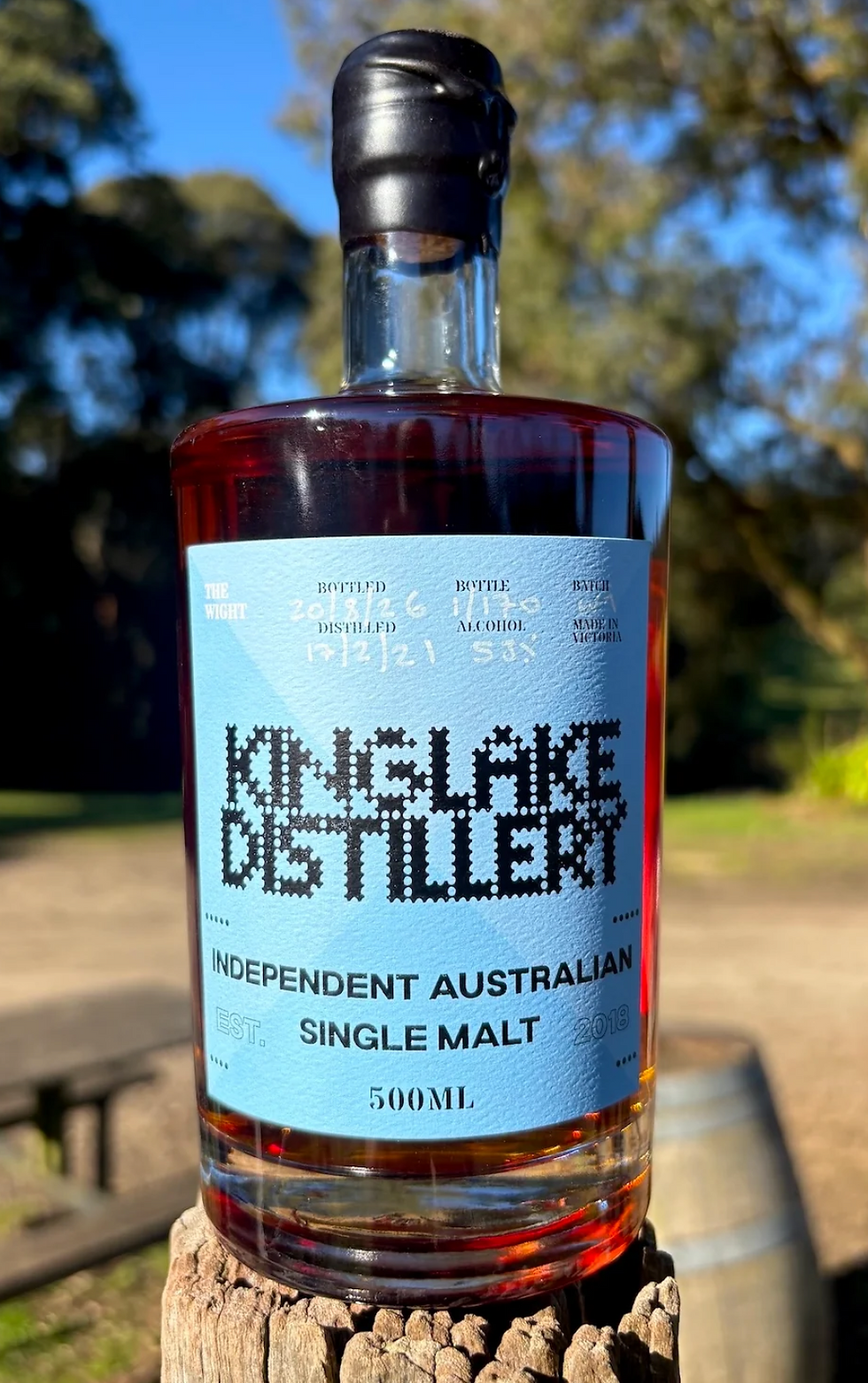
On paper, the release sounds almost suspiciously straightforward: a four-year-old single malt from Flinders Island matured in a first-fill 125-litre Topaque quarter cask and bottled at natural cask strength of 60.6% ABV. Yield: 145 bottles.
But the deeper one moves into it, the less it resembles a commercial release and the more it feels like one of those improbable historical convergences W.G. Sebald might have traced while walking through some fog-bound coastal town - where every object contains several previous lives and nothing arrives uncontaminated by memory.
Because this story does not truly begin with whisky.
It begins with nomenclature.
Which is to say: misunderstanding.
Tokaji.
Tokay.
Topaque.
Three near-identical words concealing entirely different emotional climates.

Tokaji is the sacred original - Hungary’s mythic wine of noble rot, where botrytis cinerea shrivels grapes into concentrated sweetness beneath autumn mist. For centuries it occupied a near-supernatural status within Europe. Louis XIV called it “the wine of kings and the king of wines,” though one suspects even monarchy lacked the vocabulary for properly describing great Tokaji. It tastes less “sweet” than illuminated - apricot, saffron, beeswax and something faintly ecclesiastical, as though consumed in candlelit rooms where maps still depict extinct kingdoms.
Australian Tokay emerged later as a kind of colonial linguistic trespass that gradually became its own thing entirely. Built predominantly from Muscadelle grapes and oxidative ageing in the furnace-like conditions of northeast Victoria, it evolved into one of Australia’s strangest and most singular wine styles: rich, ambered, nutty, slightly volatile and almost aggressively indifferent to modern fashion.
Then came the inevitable intervention of international trade law. “Tokay” had to go.
The replacement was “Topaque.”
And somehow the new word feels truer anyway.
“Topaque” sounds less like a drink than a geological event. A word carrying dust inside it. One imagines corrugated iron roofs clicking in afternoon heat, old wooden cellars breathing through drought, half-empty railway towns where the pub still serves fortified wine beside bowls of salted peanuts no one remembers ordering.
Unlike Tokaji, freighted with centuries of European prestige, Topaque remains peculiarly neglected despite being one of the great expressions of Australian oxidative winemaking. Perhaps because it refuses contemporary notions of refinement.
Modern luxury culture fetishises freshness - precision, minerality, immaculate acid lines. Topaque moves toward entropy instead. It embraces oxygen, concentration, evaporation and controlled ruin. Left long enough in cask, it develops flavours that feel almost post-culinary: walnut husk, antique cedar drawers, burnt orange oil, black tea forgotten beside a window, toffee edging toward bitterness, furniture polish, old libraries after rain.
At times, great Topaque can taste uncannily like walking through a second-hand bookshop carrying a paper bag of sticky date pudding.
Which, admittedly, is not how most marketing departments would frame it.
But it is precisely this atmosphere that makes Topaque such extraordinary territory for whisky maturation.
The Furneaux release carries the cask’s imprint immediately. The nose opens with dusty sultana richness, but also stranger things: chamomile gone slightly feral, warm fig skin, buttered fruit loaf, sea salt on old timber. Then come darker notes - walnut praline, singed marmalade, malted toffee, a faint medicinal edge reminiscent of opening an antique leather doctor’s bag.
The palate broadens beautifully. Pecan and vanilla fudge appear first, before yielding to concentrated dark fruit, white pepper, treacle sponge, and something oddly nostalgic - the sharp sherbet lift of fruit tingles dissolved against drying oak spice. There is also, fleetingly, the taste of burnt sugar crust scraped from the top of a crème caramel in a regional RSL sometime around before the Berlin Wall came down.
The finish lingers with remarkable composure: salted honey, old oak, tobacco leaf, orange rind and the faint bitterness of over-steeped tea. Not bitterness as flaw, but bitterness as structure. As adulthood.
Yet reducing the whisky to tasting notes feels faintly dishonest because its real achievement lies elsewhere.
Texture.
Atmosphere.
Psychological temperature.
The whisky possesses an unusual spatial quality, as though the island itself remains suspended within it. Flinders Island enters materially rather than romantically - through austerity, salinity, exposure. You sense weather in the whisky. Wind moving laterally across open land. Sea spray drying on fencing wire. Silence interrupted only by birds and generators.
Gaston Bachelard once wrote that attics, corners and cellars become repositories for imagination because they accumulate emotional density disproportionate to their physical size. This whisky behaves similarly. It feels cavernous despite its youth.
Part of that intensity comes from the quarter cask itself. Smaller casks accelerate interaction between spirit and wood, creating a far more intimate exchange than standard maturation. And because this was first-fill, every lingering trace of the previous Topaque remained available to the whisky. Nothing had yet been washed clean by successive fills. The spirit inherited the cask’s full subconscious.
That matters.
Because both fortified wine and whisky are, fundamentally, arts of managed disappearance. Evaporation sits at the centre of each tradition. Water escapes. Alcohol escapes. Volume recedes. Oxidation alters structure. Time removes things in order to deepen others.
The Japanese phrase mono no aware describes the gentle sadness accompanying awareness of impermanence - cherry blossoms becoming more beautiful precisely because they fall. This whisky carries something adjacent to that sensation. Not nostalgia, which is sentimental and backward-looking. Something quieter. More unresolved.
A recognition that flavour itself can become endangered.
That Muscadelle, the grape underpinning Topaque, now survives mostly at the periphery of modern wine consciousness. That fortified wine culture in Australia exists increasingly outside fashionable discourse. That independent bottlings disappear instantly into private collections and speculative resale markets. That islands produce their own psychology of fragility because everything arriving there also feels potentially temporary.
And yet none of this renders the whisky mournful.
If anything, it feels stubbornly alive.
Australian whisky has spent years oscillating between imitation and novelty - either reproducing Scotch aesthetics or overcompensating through gimmickry and hyperactive cask experimentation. This release does neither. It arrives fully inhabited by its own geography and inheritance.
Rutherglen fortified wine traditions.
Muscadelle grapes.
Oxidative ageing.
Bass Strait weather.
Quarter-cask maturation.
Independent bottling culture.
Salt-heavy island air.
Nothing about it could emerge from anywhere else.
Which may ultimately be its greatest achievement: its refusal to flatten itself into globally recognisable whisky language. It remains idiosyncratic. Slightly eccentric. Deeply local.
Like all the best Australian things.
And perhaps that is what lingers longest after the glass is empty - not merely flavour, but the sensation of having briefly encountered multiple histories occupying the same space simultaneously. Hungarian wine ghosts. Victorian heat. Maritime weather. Oxidised sweetness. Wood surrendering its memory molecule by molecule into spirit.
A whisky composed less of ingredients than inheritances.
Some releases ask to be chased.
This one asks to be read slowly, like marginalia discovered inside an old book no one expected to survive and is available now directly from Truth and Consequence.
---
Words by AW.
Photo courtesy of Trusth and Consequence.