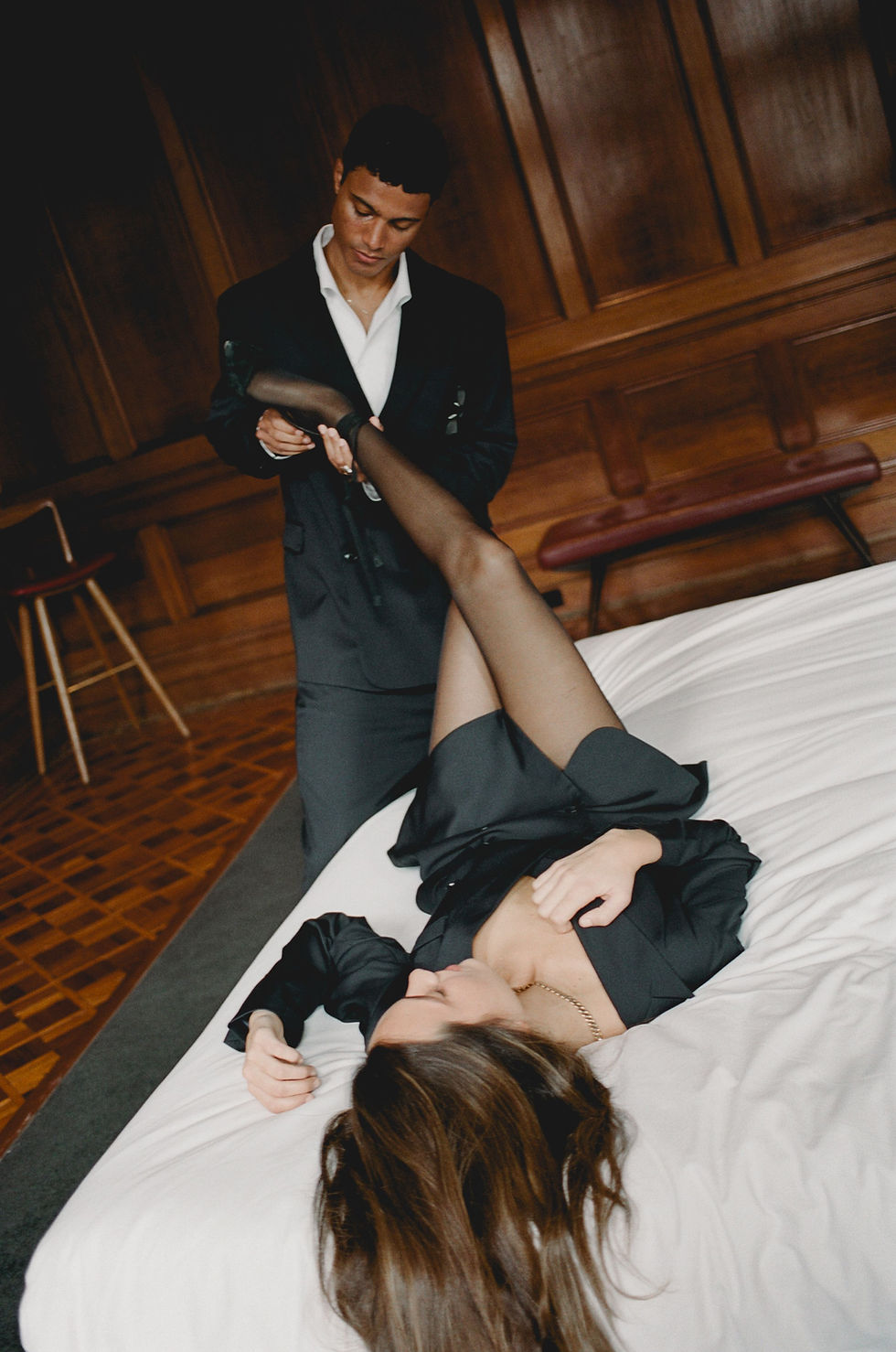
Till Lindemann and the Art of Too Much.
Till Lindemann exists in a register where moderation would feel dishonest. He is not so much an artist as a climate: dense, overheated, occasionally oppressive, yet impossible to ignore. To encounter him - on stage, on the page, or in the margins between persona and person - is to enter a world that insists on being taken whole. Not admired piece by piece, but endured, inhaled, resisted, returned to. In that sense, he approaches the idea of Gesamtkunstwerk not as completion, but as compulsion.
Within Rammstein, Lindemann is a voice contained by architecture. The band functions like a Prussian cathedral of sound: symmetrical, disciplined, engineered for maximum pressure. His lyrics - violent, erotic, grotesquely tender - gain their force precisely because they are framed. Repetition becomes ritual. Shock becomes structure. What might read as excess elsewhere acquires the gravity of ceremony. The flames are not decorative; they are load-bearing.
Rammstein understands something fundamental: provocation is most effective when it is governed. Lindemann’s role within this machine is paradoxical. He is both the most visible element and the least autonomous. His extremity is sharpened by resistance. The band does not dilute him; it edits him.
Solo, the terrain shifts.
Freed from collective geometry, Lindemann’s solo work moves closer to collage than cathedral. Albums like Skills in Pills, F & M, and Zunge feel less like statements than accumulations - grotesques piled upon grotesques, humour brushing up against cruelty, intimacy colliding with parody. The provocations arrive faster, less filtered. Sometimes they sting. Sometimes they simply linger, like a smell you can’t quite place.

Yet there is a different pleasure here. If Rammstein is monumental, Lindemann solo is diaristic in scale, even when it shouts. The English-language material of Skills in Pills leans deliberately absurd, its bluntness almost a mask. In German, particularly on F & M, his voice tightens. The language compresses meaning, allowing menace and melancholy to coexist within a single syllable. German, for Lindemann, is not just a medium but a muscle.
Live, the distinction becomes theatrical. Rammstein concerts feel like state occasions - industrial opera, fire choreographed to the millisecond. Lindemann’s solo shows are closer to cabaret dragged through a meat grinder. The spectacle remains, but the tone is looser, more carnivalesque. Blood, sex, and slapstick bleed into one another. The audience is less a congregation than a witness.
This is where Lindemann edges closer to Baudelaire than Wagner. Not the architect of a unified myth, but the poet wandering the city’s darker corridors, fascinated by decay, appetite, and repetition. Baudelaire understood that beauty and disgust are not opposites but accomplices. Lindemann’s work, especially outside Rammstein, operates in this uneasy alliance. The grotesque is not merely shocking; it is strangely affectionate.
His poetry reveals this most clearly. On the page, stripped of amplification, Lindemann becomes quieter and more precise. Collections like Messer and 100 Gedichte are blunt, yes, but also economical. Violence arrives without spectacle. Desire appears as fatigue as much as hunger. These poems feel less like performances than confessions overheard through a wall. It is here, away from flame and distortion, that Lindemann’s voice feels most vulnerable - and perhaps most human.
The idea of Lindemann as Gesamtkunstwerk holds, then, not because he achieves total harmony, but because he refuses separation. Music, poetry, performance, persona - all bleed into one another. The man does not curate distance between roles; he collapses them. This is risky, certainly, but it is also consistent. Lindemann does not flirt with excess; he commits to it.
What distinguishes him from mere provocation merchants is patience. For all the noise, his obsessions are remarkably stable. Appetite, mortality, domination, tenderness, sleep, childhood, decay - these themes recur with the reliability of seasons. He is not chasing novelty so much as circling a fixed set of questions from different angles, like a sculptor worrying the same block of stone.
In an era that rewards irony and retreat, Lindemann insists on presence. He does not wink. He does not apologise. He does not dilute. His solo work may lack the architectural restraint of Rammstein, but it offers something else: proximity. It places the listener uncomfortably close to the machinery of obsession, where repetition becomes revelation.
Till Lindemann is not a total artwork because everything aligns perfectly. He is one because everything insists on being seen together. The poetry makes more sense after the concerts. The concerts feel stranger after the poems. The solo records illuminate the band; the band redeems the excess.
He is not refined. He is not safe. He is not finished.
And perhaps that is the point.
---
Words by AW.
Photo courtesy of Till Lindemann.