


Ghosts in the Machine: Porter Robinson and the Music of Imagined Futures.
Civilisations are remembered by the sounds they leave behind.
The Renaissance survives in polyphony. The Industrial Revolution in the relentless pulse of steam and steel. The twentieth century, perhaps more than any other, believed the future would arrive through electricity, and so it imagined tomorrow as music before it imagined it as architecture. Kraftwerk reduced humanity to perfect geometry. Detroit techno transformed abandoned factories into engines of optimism. Trance stretched a single emotional idea across ten minutes, convinced that enough repetition might eventually become transcendence.
Then the future arrived and turned out to be a notification.
The chrome-plated utopia promised by twentieth-century modernism dissolved into feeds, algorithms and glowing rectangles carried in our pockets. Technology became intimate rather than monumental. Our collective soundtrack changed accordingly. The question was no longer what machines could build, but what they could remember.
It is within this strangely emotional digital landscape that Porter Robinson has become one of the most significant electronic musicians of his generation.
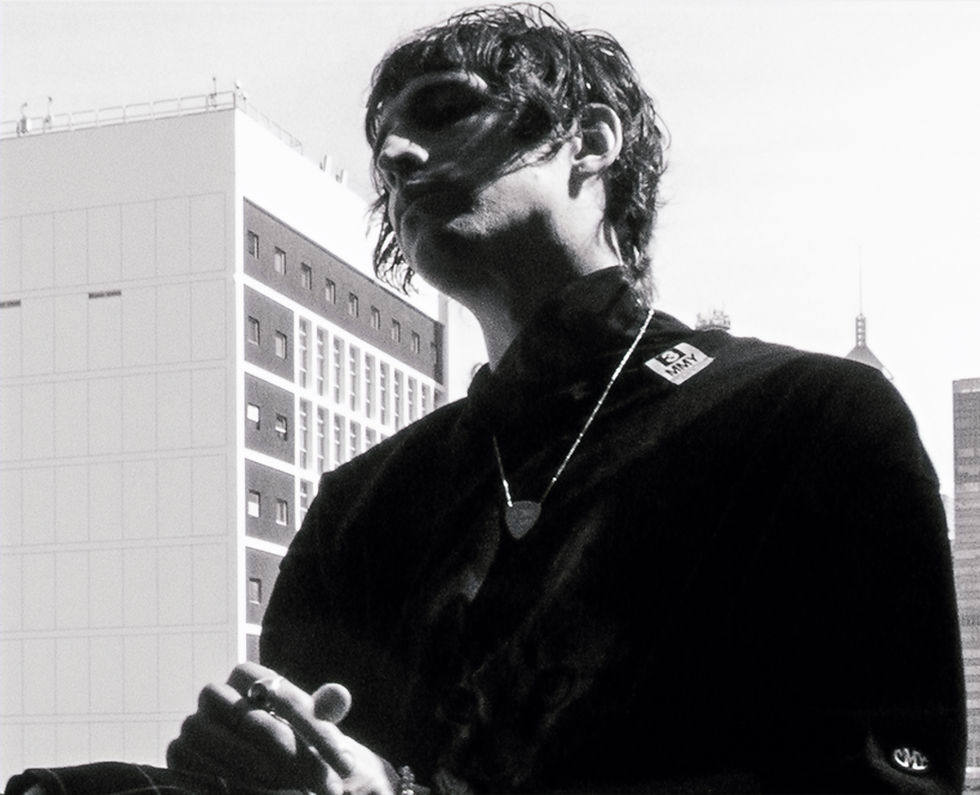
To describe him simply as a producer or DJ is to misunderstand the nature of his project. Robinson does not merely make electronic music; he composes emotional cartography for a civilisation raised online. His melodies seem to recall experiences that never quite happened: Forgotten login screens, obsolete operating systems, anime watched after midnight, abandoned multiplayer worlds and friendships conducted through usernames rather than surnames. Listening to him often feels like remembering someone else's childhood and recognising it as your own.
The philosopher Henri Bergson argued that memory is not an archive but a force that continues to shape the present. Robinson appears to extend the proposition further. His work is animated by memories of futures that never materialised - an emotional archaeology of promises made by technology before technology itself became ordinary.
That quality made his sold-out headline DJ set at Carriageworks for Vivid Sydney feel unexpectedly significant.
Carriageworks remains one of Sydney's most intellectually satisfying venues precisely because it refuses cosmetic perfection. The former railway workshops still carry the muscular honesty of manufacture. Their riveted steel and cavernous proportions remind visitors that they were built for work rather than spectacle. Into this monument to the mechanical entered an artist whose career has been devoted to discovering humanity within machines.
The dialogue between venue and performer was almost architectural.
Robinson has always occupied an unusual position in electronic music. He emerged during the explosion of festival EDM, when maximalism became an industry and bigger drops were mistaken for deeper ideas. Rather than perfecting that formula, he quietly abandoned it. Worlds replaced domination with vulnerability. The Virtual Self project excavated the visual and sonic language of late-1990s trance and arcade culture with the precision of an archivist restoring a lost civilisation. More recently, SMILE! embraced the fragmented, self-aware logic of internet culture while refusing its habitual cynicism.
His artistic trajectory resembles less the linear progression of a dance producer than the restless reinventions of David Bowie or the conceptual migrations of Brian Eno. Yet even those comparisons feel incomplete. Robinson belongs to the first generation of major musicians whose aesthetic education occurred simultaneously across Japanese animation, video game soundtracks, message boards, classical harmony, internet memes and club culture. His influences do not coexist politely; they collide, creating something that sounds unmistakably contemporary because it could scarcely have existed before broadband.
Watching him perform only reinforces the point.
Many DJs are masters of momentum. They regulate pressure like engineers, controlling release with mathematical precision. Robinson works differently. He manipulates emotional temperature rather than kinetic energy, allowing moments of ecstatic uplift to dissolve unexpectedly into fragility before rebuilding them elsewhere. The set unfolds less as a sequence of tracks than as a novel assembled from sensations.
There are echoes here of Gustav Mahler, who insisted that a symphony should contain an entire world. Robinson's world simply happens to include MIDI choirs, hyperpop distortions, trance arpeggios, cinematic crescendos and the emotional residue of a generation that grew up believing digital spaces were places rather than platforms.
This refusal of stable identity explains his continued relevance. Contemporary culture increasingly rewards recognisability. Algorithms favour repetition because repetition is measurable. Robinson has consistently chosen uncertainty instead. Each project appears to dismantle assumptions created by its predecessor, treating artistic identity not as a brand to be protected but as a question to be pursued.
The Japanese aesthetic concept of mono no aware describes the gentle sadness that accompanies the recognition of impermanence. It is often associated with falling blossoms or changing seasons, but it equally describes Robinson's finest moments. His melodies arrive already aware of their disappearance. Their beauty lies precisely in their inability to remain.
Within the broader context of Vivid Sydney, the performance acquired another layer of meaning. The festival celebrates technology through illumination, projection and spectacle, yet Robinson suggested that technology's most profound achievement may be emotional rather than visual. It has altered not merely how we communicate but how we remember, imagine and long.
The French composer Claude Debussy once observed that music exists in the space between the notes. Porter Robinson seems to understand that contemporary life exists in another kind of interval: between the analogue world we inherited and the digital one we continue to invent.
For two hours inside a nineteenth-century railway workshop, that uncertain territory found its soundtrack. The sold-out audience came expecting electronic music. What they encountered instead was something rarer - a meditation on memory, possibility and the strange melancholy of living in a future that still feels unfinished.
---
Words by AW.
Photo courtesy of Porter Robinson.


