


Beautiful Catastrophes: Inside The Australian Ballet’s Haunting Romeo and Juliet at the Sydney Opera House.
There is something almost absurdly moving about encountering Romeo and Juliet in 2026. Created by John Cranko in 1962 for the Stuttgart Ballet and now regarded as one of the defining narrative ballets of the twentieth century, it retells William Shakespeare’s tragedy of two adolescents who confuse the overwhelming force of first love with something metaphysical and irrevocable. Encircling them is an older world of fathers, aristocrats, clerics and rulers so devoted to the choreography of honour, decorum and civic order that these very instruments of social stability harden into the mechanisms of their undoing. What is intended to preserve harmony instead acquires the cold efficiency of fate, converting etiquette into ordinance and ordinance into tragedy.
What gives Cranko’s reading its lasting force is his refusal to domesticate the story’s essential irrationality into something tidy or instructive. Romeo and Juliet are never framed as psychologically “balanced” lovers or moral exemplars; instead, they are rendered as figures caught in an accelerating current of feeling that exceeds their capacity for understanding, as though emotion itself has become an external climate they cannot step out of. In this sense, Cranko seems to arrive at the same insight that Roland Barthes articulated in A Lover’s Discourse: that lovers are less coherent individuals than meteorological events, systems of pressure, turbulence and sudden atmospheric change.
Tonight, at the Sydney Opera House, The Australian Ballet’s revival unfolded with the sumptuous visual richness of a Renaissance fresco left too close to a flame. Jürgen Rose’s Verona glowed in bruised golds, candlelit bronzes and moonlit silvers, evoking an Italy of courtly splendour already shadowed by decay. Jon Buswell added a distinctly painterly depth, sculpting bodies and architecture with the chiaroscuro intensity of Caravaggio, where beauty and violence occupy the same frame. At times, the production felt less like a conventional ballet than a film by Luchino Visconti - opulent, psychologically charged and suspended somewhere between historical pageant and lucid dream.
And then there was Sergei Prokofiev.
Composed between 1935 and 1936, Prokofiev’s score is one of the towering achievements of twentieth-century ballet music - by turns brutal, tender, sardonic and devastatingly lyrical. It does not merely accompany the choreography; it anticipates, amplifies and at times seems to know the characters more intimately than they know themselves. From the ominous grandeur of the Dance of the Knights to the heartbreaking fragility of the lovers’ final scenes, the music functions as both narrator and oracle, announcing from the outset that tragedy is not a possibility but a certainty.
Under the direction of Jonathan Lo, the Opera Australia Orchestra transcended the conventional role of accompaniment and became something far more essential: the subterranean nervous system of the drama itself.
The opening of the Dance of the Knights did not merely sound imposing; it descended with the inexorable weight of a portcullis dropping deep beneath a medieval fortress, all iron, stone and foreboding. The orchestra seemed to conjure not music but architecture - a sonic edifice of menace in which each brass accent felt like another slab of granite lowered into place.
And then, almost without warning, the clarinet entered in an entirely different register. Its line possessed a startling delicacy, as if the score had momentarily exposed its own pulse. The sound was so vulnerable and translucent that it seemed less performed than overheard - not unlike a private thought drifting through the cracks of Prokofiev’s monumental design, or a shaft of winter light finding its way into a cathedral otherwise built from shadow, as though the score itself briefly doubted the inevitability of tragedy. One was reminded that the great challenge of Romeo and Juliet is that Prokofiev’s music is so complete an artwork it threatens to eclipse the choreography entirely.
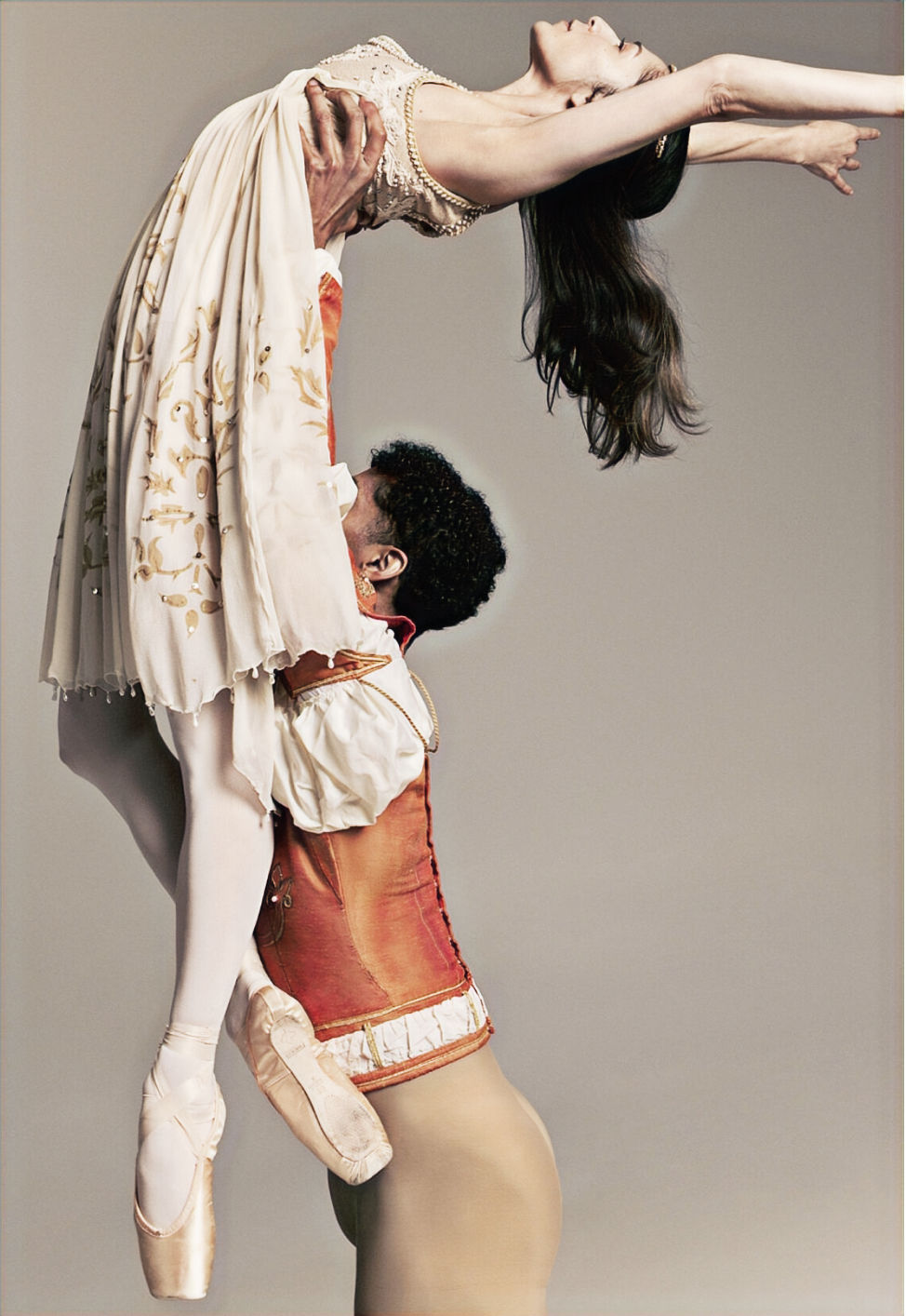
Grace Carroll’s Juliet was fascinating precisely because she resisted grand tragedy. Technically sublime - expansive arabesques, liquid port de bras, lines that seemed to unfold beyond effort - she approached Juliet with an unusual inwardness, more Sofia Coppola heroine than operatic ingénue. Rather than yielding to passion in any overtly theatrical sense, she seemed to be inhabited by it gradually and almost against her own will, as though emotion had entered not with the force of a declaration but with the stealth of weather - accumulating imperceptibly until her every gesture bore the unmistakable imprint of something larger than conscious intention. Joseph Caley’s Romeo was elegant and deeply attentive as a partner, though at times too emotionally composed for Shakespeare’s lovesick existentialist. Only in the final act did something rawer emerge beneath the refinement.
If the central chemistry occasionally felt more restrained than combustible, the surrounding performances surged with life. Marcus Morelli’s Mercutio was magnificent - witty, insolent, faintly feral - dancing as though irony itself had become physical form. Jarryd Madden’s Tybalt brought genuine menace, his presence shifting scenes from courtly spectacle into something genuinely dangerous.
The corps were superb throughout, particularly in Dance of the Knights, which remains one of ballet’s great studies in power made visible: cool, geometric, authoritarian. Watching those severe formations unfold against Prokofiev’s brutalist grandeur, one briefly thought of Canetti’s Crowds and Power - the seduction of bodies moving in disciplined unison.
And perhaps that is why Cranko’s Romeo and Juliet still endures sixty years on. Beneath the velvet, chandeliers and choreography lies something disturbingly timeless: a story about young people choosing intensity over safety while institutions fail them with absolute confidence.
The audience already knows the ending. The dancers know it. The score practically announces it from the overture onward.
Yet everyone proceeds anyway.
---
Words by AW.
Photo of principal artists Robyn Hendricks and Davi Ramos courtesy of Pierre Toussaint.


